Filter :

Coronavirus has been the highlight of the year 2020. It has effectively sent the world in a frenzy and shifted the outlook of the healthcare sector. Every single person has been impacted by COVID-19 in one way or another. People have become apprehensive of even common viral infections and rightly so. While the battle against COVID is ongoing, we cannot afford to fall sick. The advent of winters during a pandemic calls for the need of flu shot vaccine.
In this article, Dr. Tushar Tayal, head of internal medicine at the CK Birla Hospital, offers his insights on the relevance of influenza vaccines during the chaotic times of coronavirus.
Table of Contents
Before we discuss the importance of flu vaccination, let us first grasp an overview of what flu is all about.
Common flu (influenza) is a viral infection that occurs during the months of winters. This infection mostly affects the respiratory system which includes your nose, throat and lungs.
The symptoms of common flu include-
Every patient experiences these symptoms differently. It is not necessary that every flu patient develops a fever. Most of the time, influenza symptoms alleviate on their own. However, if the symptoms persist, common flu can turn into potentially serious illnesses resulting in hospitalisation.
Flu infection is of two types – Type A and Type B. Most infections are associated with Type A influenza.
A flu shot vaccine, as the name denotes, is a vaccination that provides protection against the influenza virus.
You can avail exclusive flu shot package @ INR 2100 only at the CK Birla Hospital.*
The seasonal flu vaccine is recommended to people of all age groups (above the age of 6 months). This vaccination is to be given once every year.
The importance of influenza vaccines has increased because of coronavirus which also has flu-like symptoms. The overlap in the signs of common flu and COVID makes it difficult for healthcare providers to distinguish between the two.
After at least two weeks of getting a flu vaccine, your body begins to develop antibodies to fight the infection. Healthcare providers recommend taking influenza vaccines almost two weeks ahead of the seasonal flu.
In India, the ideal time to take a flu shot is during September. New vaccines against the current strains of flu also become available in the market at this time.
However, it is never too late to protect yourself from viral infection. If you have missed taking the seasonal flu vaccine in September, you can avail it now at the CK Birla Hospital.
There are majorly three variations of influenza vaccines available in the market – trivalent flu vaccination, quadrivalent flu shot vaccine and nasal flu vaccine.
All these vaccines are equally effective. However, these vaccines protect against a different number of strains of influenza.
Your physician will decide which vaccine is most suitable for you after assessing your overall health and age.
A seasonal flu shot decreases your chances of developing severe illnesses. It is especially important in the case of elder people.
People over the age of 50 are predisposed to multiple ailments such as diabetes, asthma, heart diseases, high blood pressure among others. Due to preexisting health concerns, they are more vulnerable to developing severe effects of influenza. Influenza vaccines provide significant levels of immunity and protection to the elderly.
The seasonal flu shot is essential for people living with chronic health conditions, pregnant women and young children.
All three categories of influenza vaccines are very potent. However, no vaccination offers 100% protection against the infection.
No, the seasonal flu vaccine does not pose any serious side effects or risks.
Some people may develop a mild or low-grade fever after receiving the flu shot. The fever can lasts up to 2 days. While some others may experience light pain or swelling at the site of infection.
No, flu vaccination does not protect against coronavirus. While the vaccine for mysterious coronavirus is still being researched, you can protect yourself from common flu.
It should be noted that influenza and COVID-19 are two different types of viruses which can affect a person at any time. It is possible that a person may catch both the viruses at the same time. In such a rare case, the severity of the symptoms may be extreme.
It is, therefore, advisable that you should get the seasonal flu shot during this ongoing pandemic.
Basic preventive measures and hygiene maintenance are important from protection of seasonal flu. Here are some expert-approved tips to safeguard you and your family from infections-
Watch the video to know the answer to some frequently asked questions about Flu Vaccination by Dr Tushar Tayal, head of Internal Medicine department at the CK Birla Hospital.
The flu shot vaccine is an important preventive tool against influenza. Besides protecting against common flu, vaccinations improve your immunity and drop your risks you are developing other illnesses.
You can avail our exclusive seasonal flu shot package @ INR 2100/-. Book an appointment with Dr Tushar Tayal at the CK Birla Hospital for more information.
Also, read: Fever | Common causes and when should you worry?

The female reproductive system is a very complex one. The conditions that can affect the fertile health of a woman are diverse. It is essential for women of childbearing age to have a basic understanding of these ailments. One of the most frequent female health concerns is the development of uterine fibroids. In this article, Dr Aruna Kalra, one of the best gynaecologist in Gurgaon, will discuss what uterine fibroids are. More so, she offers her insights on which treatment modality is better: myomectomy vs hysterectomy.
Let us begin by understanding what fibroids are all about.
Table of Contents
Uterine fibroids are growths of muscular tissues that develop in or around a woman’s uterus (womb). These growths are of different sizes; some are as small in size as chickpeas while others may grow to even cause the uterus to enlarge.
Uterine fibroids may appear a cluster of growths or as a single tumour. The size and location of uterine fibroids determine the type of symptoms a woman may experience. Some of the most common symptoms of fibroids include:
As a fibroids treatment measure, gynaecologists can offer to remove these lumps. Uterine fibroids treatment is possible by surgical and non-surgical interventions with the advent of modern scientific tools.
The appropriate fibroids treatment will depend upon several factors. Your healthcare provider will analyse your overall health, your symptoms, the size and location of the fibroids and your expectation from uterine fibroids treatment.
Usually, if the fibroid is small in size, doctors aim to treat with the use of medicines. However, surgical intervention becomes necessary in case the fibroids are large. Hysterectomy and myomectomy for large fibroids are two effective treatment options.
Uterine fibroids can be detected during your routine gynaecological screening. If you do not go for regular screening, your doctor will indicate a variety of tests if you suspect this condition.
Some of the most common diagnostic tests include:
An abdominal ultrasound scan will help your doctor in visualising the presence of abnormal growths. In case, your fibroids are not located easily through an abdominal scan, your doctor may perform a transvaginal ultrasound. In a transvaginal scan, your doctor will insert a small ultrasound probe through your vagina to see clear images of the fibroids.
A hysteroscopy is an advanced screening test in which your doctor would use a medical device called the hysteroscope. A hysteroscope is a small lighted telescope that helps in examining the inner walls of the uterus. In this procedure, your doctor would insert the hysteroscope into your womb via your vagina and cervix.
Besides these imaging tests, your healthcare provider will assess your overall health by doing regular pelvic exams, blood work, and urine tests.
Uterine fibroids can lead to severe health complications if left treated. They are often a contributing factor for infertility. There are two supreme remedy modalities – myomectomy vs hysterectomy fibroids treatment. Let us explore both of them in detail.
It is considered the frontline treatment for large fibroids. In a traditional myomectomy, the surgeon makes a large incision in the abdomen. Through this surgical incision, he/she locates the uterine fibroids and remove them. The surgeon later stitches or sews back the incision and proceeds for recovery.
There is also a more advanced method for this surgery. It is known as laparoscopic myomectomy for fibroid removal. A laparoscopic procedure is more beneficial for the patient. In this procedure, the surgeon makes several small incisions in the abdomen. He/she continues to insert a thin tube that has a tiny camera attached at one end. This tube is known as a laparoscope.
This medical device helps the surgeon to locate and visualise uterine fibroids in a better way. Through the other incisions, the surgeon removes the abnormal growths. A laparoscopic myomectomy for fibroid removal is more pain-free method. It causes less scarring and promotes quicker recovery for the patient.
A hysterectomy for fibroids is often the last resort of treatment for this condition. A hysterectomy is an invasive medical procedure in which the surgeon entirely removes the uterus from the patient’s body. This procedure is indicated to patients who have developed large fibroids inside the womb.
A hysterectomy for fibroids proves to be a permanent solution for this ailment. However, it is an irreversible process. If the uterus is removed from the reproductive system, the women cannot bear children anytime in future.
While choosing hysterectomy, the patient should carefully consider if she is willing to become pregnant in the later future. If yes, then she should not go ahead with this procedure and rather discuss other possibilities with her gynaecologist.

Myomectomy vs hysterectomy fibroid treatment is very case-specific. Both the treatment methods are highly effective and do not pose life-threatening risks. However, your overall health and expectation from the clinical outcome determine which is better for you.
To know more about uterine fibroids treatment, you can book an appointment with Dr Aruna Kalra, the Best gynaecologist at the CK Birla Hospital.

Prostate cancer is the second most diagnosed cancer in men worldwide. The prevalence of prostate cancer is significantly high and ever-increasing. According to a report by ICMR, the incidences of prostate cancer are likely to double in the year 2020.
Fortunately, it is also a condition that can be easily managed. Oncologists are able to effectively treat prostate cancer if the diagnosis has arrived at an early stage. Proper medical management is offered by healthcare providers even when the cancer is detected at late stages.
In this article, Dr Shalabh Agrawal, best urologist and andrologist in Gurgaon, talks about everything you may need to know regarding different treatments for prostate cancer.
Table of Contents
The prostate is a walnut-shaped gland located under the bladder in the lower abdomen area in men. This gland is responsible for the production and transfer of seminal fluid.
Prostate cancer occurs when the cells present in this gland begin to multiply at an abnormal rate. In most cases, this cancer remains restricted to the prostate gland. However, it can also spread to other areas in the body.
Prostate cancer is among the top ten cancers affecting Indian men over the age of 60 years.
Prostate cancer is difficult to diagnose in the early stages as it does not highlight any symptoms. The signs of this condition develop when cancer has progressed. Nonetheless, you should stay wary of common prostate cancer symptoms.
Some of the prostate cancer symptoms include:
Advanced prostate cancer can lead to urinary issues. It is because the tumour may press on the bladder which is located nearby.
You may experience repeated urgency to urinate, painful urination, blood in the urine and more.
Among the top prostate cancer symptoms is the issue of sexual problems faced by men.
Men living with this cancer may have difficulty in maintaining or getting an erection. You may also experience the presence of blood in the semen and painful ejaculation.
If you are suffering from prostate cancer, you may have pain in your lower back, abdomen, and pelvic area. You should consult your healthcare provider if you feel persistent discomfort in these body parts.
It is possible that some of the above-given symptoms are signs of other urological or sexual conditions. Therefore, screening tests are indicated to draw an accurate diagnosis.
Read: What are the early signs of prostate cancer?
There is not a defined set of prostate cancer causes. It is believed that prostate cancer is caused when the cells in prostate gland undergo changes in their DNA. The unusual DNA changes lead to the growth and spread of cancerous cells.
Though it is difficult to tell why prostate cancer occurs, doctors can help to identify who may be affected by this cancer.
A certain group of people is at an increased risk of developing this cancer. The risk factors of prostate cancer are:
Prostate cancer stages help in detecting how much cancer has progressed. Your healthcare provider will analyse your cancer stage to offer the best treatment for prostate cancer.
Prostate cancer is categorised into four different stages:
Stage 0 – In this stage, cancer cells are not very distinct and aggressive. They are present in a tiny area and do not show bothering symptoms.
Stage 1 – In stage 1 of prostate cancer, the cancerous cells are present inside the gland. Highly effective treatment can be offered at this phase.
Stage 2-3 – If cancer has advanced to stage 2 or 3, it implies that the cells have spread outside the prostate gland as well. The nearby tissues of the prostate gland are affected at this stage.
Stage 4 – This is the most advanced of all prostate cancer stages. By this time, cancer spreads to other body parts such as the lungs and bones.
Prostate cancer treatment can be successfully given if the right diagnosis happens early. Men who are at a higher risk of developing this cancer should start their screening process soon. Doctors perform a variety of tests to diagnose prostate cancer:
Digital rectal exam (DRE): A DRE is a simple exam in which a doctor examines the prostate through the rectum.
Laboratory tests and imaging: You may be indicated to take a couple of blood tests and urine tests. You may also have to undergo imaging tests such as MRI, CT Scan and X-rays depending upon your condition.
Prostate-specific antigen (PSA) test: PSA is a very specific test that helps in the detection of prostate cancer. Your healthcare provider will assess a blood sample to test the levels of PSA (a protein produced by the prostate gland). High levels of PSA indicate more likelihood of prostate cancer.
The best treatment for prostate is unique for every patient. The team of medical doctors will decide the right treatment for you based on your age, overall health and stage of cancer.
The different treatments for prostate cancer are:
In an open prostatectomy, surgeons make a large incision in the lower abdomen area. Through this incision, they access the prostate gland. Along with the tumour, a small number of nearby tissues are also removed.
Laparoscopic surgery is a minimally invasive method. In this procedure, surgeons make small incisions in the lower abdomen. A thin tube (attached with a camera) called the laparoscope is inserted through one incision. Surgeons use this medical device to locate cancer in the prostate gland.
Every man should take into regard the following while choosing a treatment for prostate cancer.
Prostate cancer can significantly impact your physical, emotional and sexual health. You should monitor your health frequently and adopt a healthy lifestyle. This illness can be prevented with a well-balanced nutritious diet, regular exercise and early screening. It is important to learn about prostate cancer symptoms and treatment to make the most suitable choices.
The CK Birla Hospital offers the best treatment for prostate cancer in Gurgaon. You can book an appointment with Dr Shalabh Agrawal, the best urologist and andrologist at the CK Birla Hospital, Gurgaon for more information or personalised guidance.
Also, read Everything you need to know about prostate enlargement: Benign prostatic hyperplasia</span.

Remember when we were kids, our parents would tell us to only concentrate on our studies. Extracurricular activities like playing sports or learning music were given less importance. Thankfully, this thinking has changed now and sports has gained prominence. People understand the contribution of athletics and games for a healthy life. However, it may also lead to injuries. In this article, Dr Praveen Tittal, Sports Injury Specialist at the CK Birla Hospital explores what is sports injury.
Table of Contents
Those who participate in regular physical activities have reduced risks of complications. Nonetheless, getting injured while playing sports is also natural as no one is immune to injuries. With an increased participation in sports events at school levels, sports injuries are also quite common in children. Dancers and gym-goers are also at a high risk of sports injuries.
There are different reasons and factors that lead to a sport-associated injury. Listed below are some of what are the main causes of sports injuries:
Every individual is different and so is their physical structure. There may be one or two weak points in everyone that are more prone to injuries. Being unaware of these physical limitations can cause injuries that might restrict sports activities and cause pain and discomfort.
Sports injuries can be broadly classified into minor and major injuries. The differentiation is done based on the severity and complexity of the injury. The most common first-aid technique on how to recover from sports injuries is using the R.I.C.E. approach, i.e. Rest, Ice, Compression and Elevation.
It is one of the most common sports injuries. A sprained ankle occurs when the ankle twists or rolls awkwardly. This awkward movement of the ankle can tear or stretch the ligaments holding the joints together. This can cause pain and discomfort.
Most sprained ankles cause tears on the ligaments on the outside of the ankle.
Treatment
The best treatment for a sprained ankle is keeping the ankle compressed in the first 24 hours. The elevation should keep the ankle above the heart level to help in reducing swelling.
Ice packs should be applied to the affected area intermittently. Slowly after 24 hours, mild pressure can be applied on the ankle. Rest and correct care are the only ways to heal up from a sprained ankle and resume normal activities.
Also, read: Common foot and ankle injuries amongst athletes
A groin pull injury is the result of too much pressure on the muscles of the groin and thigh area. This type of sports injury is typical in activities which require a lot of jumping and running such as football and hockey.
A groin pull causes pain and tenderness to the inside of the thigh. It also causes pain during the movement of the knee. The severity of this type of injury depends on the level of strain put on the groin muscles.
Treatment
The best cure for a groin pull is to rest and to apply ice packs. The groin muscles heal once all the pain and swelling reduces. To rule out other complications associated with this sports injury, doctors take X-rays along with a physical examination of the injured area.
Depending on the results of the X-ray, doctors may prescribe painkillers.
Hamstrings are a group of three muscles that run along your thigh. A hamstring strain happens when one or more of these muscles is overloaded with pressure.
Excessive pull on these muscles can lead to a tear. Even the slightest pain caused in the hamstring requires clinical intervention. The more severe the hamstring pull, the harder it becomes to walk or even stand.
Treatment
Similar to groin pulls and ankle sprain, hamstring strains heal on their own, given enough time. Patients should avoid putting weight on the injured leg. Applying ice packs reduces swelling and decreases pain.
The affected area should be compressed with a bandage to allow for a faster healing. However, a severe sports injury to the hamstring requires surgery to fix the muscles internally.
Strengthening exercises and stretching are some tips on how sports injuries can be prevented.
ACL stands for the anterior cruciate ligament. The ACL injury acts as a connecting muscle between the thighs and the shin. It is one of the vital ligaments that secure the knee joints. An ACL injury occurs when a sudden jarring movement to the knee pops it out of the joint.
The injury causes swelling at the knee and makes it difficult to stand or walk.
Treatment
Imaging tests like X-rays and MRIs offer a proper look into the severity of the injury. Unfortunately, most ACL injuries require surgery to regain full function of the knees – especially so for young athletes.
Even after surgery, the patients need physiotherapy as specific exercises help in restoring knee functions and adding strength to the leg muscles.
Also Watch: Hip Replacement Explained by Dr. Ashwani Maichand
Broken bones or fractures are quite common in those pursuing sports. However, the severity of the injury depends on the way the bones are broken. Due to the repetitive nature of movements during certain sports, stress fractures that cause a slight break in the bone are quite common in players.
Severe fractures also occur due to a sudden and forceful push against bones while participating in sports.
Treatment
A stress fracture usually requires six to eight weeks to heal completely. The affected area is compressed and iced to reduce swelling. A severe fracture involving broken bones, either wholly or partially, requires surgery to align the bones back together.
As bones take between six to twelve weeks to heal completely, the physician will check the patient periodically to assess healing after surgery. Depending on how fast the bones heal, physiotherapy exercises are done to strengthen the bones.
These injuries are a result of constant, repetitive, and prolonged use of muscles as in sports like running, cycling, and swimming. Stress fractures, runner’s knee, and tennis elbow are also common sports injuries.
The major cause of these chronic injuries is the lack of proper training given to athletes.
Treatment
As chronic injuries are subtle and develop over time, patients must report even the slightest discomfort and pain to the Sports Injuries doctor for evaluation.
Along with resting the affected area, most chronic injuries can be alleviated with the use of medication accompanied by physiotherapy.
Sports injuries are unpredictable and hence, unavoidable. However, you can reduce the occurrence of injury with a few preventive measures.
Here’s how sports injuries can be prevented:
The foremost thing to do to reduce the occurrence of sports injuries is to invest in good quality sporting gear. You should also develop a correct fitness regime that focuses on core exercises and stretching all the relevant muscles.
Sportspersons, gym-goers, and dancers can benefit immensely with guidance from trainers who excel at providing such support. Sports therapy is a compulsory part of an athlete’s fitness protocol that seeks to reduce the impact of sports injuries.
Therapy also involves rehabilitation of the players to resume their normal activities as soon as possible.
It is nearly impossible to survive in this competitive arena without going through a sports injury. The best way to combat common sports injuries is by acknowledging the directives given by the trainers and orthopedic doctors. The above article offers insights on what are the main causes of sports injuries and how to recover them.
For more information or personalised guidance on how to deal with sports injuries, you can visit the CK Birla Hospital.

Parents are the biggest cheerleaders for children through the circle of life. Every achievement by a child is a matter of pride, whether it is a small step of potty training or graduating from a top college. The development milestones for baby are curiously tracked soon after their birth.
The first year of a child’s life is extraordinarily important. They go through a massive transformation in terms of growth during this time. Although, no two children are the same, there is a common set of baby development milestones.
Child healthcare experts all over the world have approved of some common guidelines to track a baby’s growth. In this article, Dr Shreya Dubey, one of the best paediatric and neonatologists at the CK Birla Hospital, explores the baby first year milestones.
Table of Contents
Growth and development milestones are basic physical and physiological checkpoints that a child acquires as they grow. These milestones can be regarded as basic life skills that help baby progress.
Child development milestones are categorised into four key areas:
A baby’s first year is a time for utmost joy and growth. It is a necessary life event for the child and an interesting time for the parents.
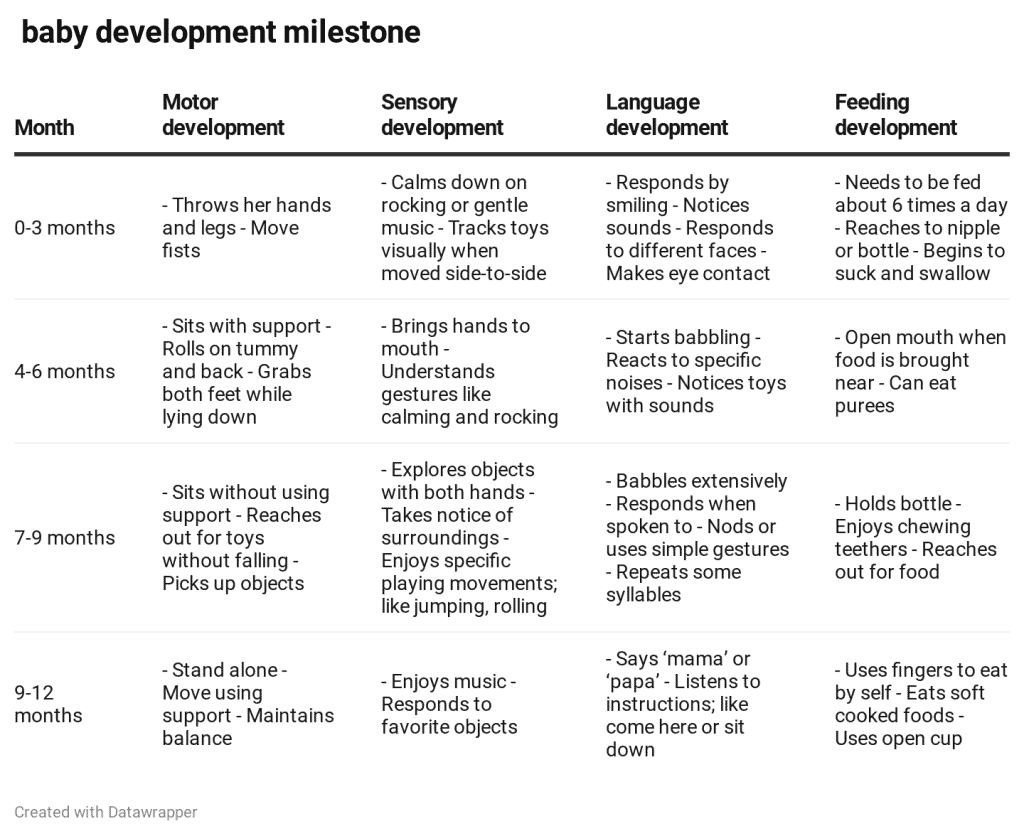
Welcome to the journey called parenting! At 0-3 months, the newborn has just started his/her life. Your baby will go through tremendous changes in the first few months. This is also the time when your baby will require most of your attention and love. Major growth and development milestones in the first 3 months are listed below.
Motor development milestones – Your newborn will be able to move her hands. She would open and close a fist and place her hands in the mouth by 3 months. If your baby is placed on her stomach, she will be able to pull her head up. During the first 3 months, your infant will gain slight control over her body. She would be able to life her head very briefly. If your baby is happy and playful, she will also throw her hands and legs in joy.
Sensory development milestones – Your baby will be able to latch her attention to specific things like some toys. If you move her favourite toy from side to side, she would be able to track its directions. She would also possibly respond to lullabies, gentle playful and calming music.
Language development milestones – The communication aspect starts early for infants. Your little one would start to respond by smiling. She would revert to specific sounds and also make eye contact with parents. You would also be able to notice a difference in her cries depending upon her need.
Feeding milestones – Your baby would be enthusiastic about feeding by 3 months old. You can expect her to gorge at the nipple or bottle. You can expect her to be fed atleast 6 times during a day.
Motor development milestones – By 6 months, your baby’s motor skills will develop largely. She would be able to accept most of her body weight. She would start sitting or standing with the help of additional support. You can see that she will also playfully begin to roll on tummy and roll back. She would start to bend her legs and reach for her toes during this period.
Sensory development milestones – Your baby will become more familiar with her surroundings. She will understand specific sounds and you would be able to calm her through rocking or moving gently. You can see her explore her toys and other objects with her hands at 6 months.
Language development milestones – Your baby will start communicating with you through the baby noises. She would babble and giggle while expressing. She would also pay additional attention to toys that make sounds.
Feeding milestones – Your baby will be able to notice food by now. She would start eating baby foods like cereals, purees and fruits.
Motor development milestones – Your baby will be able to sit by this time. She would not require any extra support to sit. She would move forward to reach out for toys. She would be quick to respond to certain noises. You can expect your baby to pick up things.
Sensory development milestones – This is an experimental time for the baby. Your little one would be very keen to explore different objects. She would curiously examine her toys with both hands. You can analyse which playful movement does she enjoy. The sensory sight of your baby will also expand and she would also be able to place her attention at faraway objects.
Language development milestones – Your baby’s babbling will be more expressive. You can recognise the repetition of certain syllables in her babbles. Her recognition of particular people and objects will enhance. She will grow familiar with who her parents her, which toys are her favorite and more. She may also nod or react to a familiar name or act using simple gestures.
Feeding milestones – By 9 months, your baby will start holding her own milk bottle. She will start to enjoy chewing on teethers. She will also begin to react to certain smells and foods.
Congratulations! Your newborn has transformed into an infant by the first year. She has accomplished most of her child development milestones. There is, still, much to watch out for.
Motor development milestones – Your baby will begin to move around furniture with the support of hands. Her balance would considerably improve. You can teach your baby to clap her hands at this time. She would start to throw objects in places with a large opening like containers. Her movement would be more flexible and independent.
Sensory development milestones – Your baby will become more curious about her toys. She will also, probably, have her favorite songs and sounds. She will react more extensively to objects that she likes or dislikes.
Language development milestones – By 12 months, your baby will not only identify but begin to call you ‘mama’ or ‘dada’. She would also understand meaningful instructions. She can babble at a longer extent and possibly use a couple of understandable words. Her communication will be more clear.
Feeding milestones – Your baby will begin to discover a variety of food. She would be able to digest more softly cooked foods by now. She can drink through an open-mouthed cup. She may start self-feeding using her fingers.
Every child is unique in his/her own way. Child development milestones should be looked at as guidelines for parents to track the baby’s growth. These developments are not necessarily followed in each child’s case. If you have had a pre-term baby, you should consider these guidelines differently.
If your child is not able to reach these baby development milestones, you should avoid panic and speak to an expert. A verified paediatrician would be able to help you in case your baby is growing differently.
Recording these growth development milestones in the first year is a fascinating approach. You can support your child in a better manner if you are aware of this aspect.
If you need clinical assistance to track baby milestones the first year, you can visit CK Birla Hospital in Gurgaon.

Understanding your menstrual cycle and selecting the right sanitary product to use goes a long way in deciding how comfortable you would be during your periods.
Every girl and woman may experience menstruation differently. While some girls may experience unpleasant symptoms such as menstrual cramps, mood swings, breast tenderness, heavy flow and long periods, others may hardly notice their periods. In both cases, knowing what is unusual is important in detecting any menstrual disorder.
In this article, Dr Anjali Kumar – leading gynaecologist and obstetrician in Delhi NCR, explains all about menstruation and shares tips on selecting the right sanitary product.
Table of Contents
Menstruation, more commonly known as periods, is the natural process of your body discarding blood and tissue from your uterus through your vagina. It generally occurs every month.
Menstruation or periods occur due to our “menstrual cycle”. Let us understand this in further detail.
Every woman is born with two ovaries, each of which contains several immature eggs or oocytes. During the menstrual cycle, the ovaries also produce hormones: oestrogen and progesterone, in order for the oocytes to mature into ova (matured eggs). Only matured eggs can be fertilised for a pregnancy.
These hormones also help your uterus prepare for a pregnancy every month by making the uterine lining or endometrial lining thick and spongy. In case of pregnancy, the resulting embryo attaches itself to the thick uterine lining and continues to grow. This lining is made of tissue and blood. If pregnancy doesn’t happen, the body proceeds to expel this excess lining through the vagina in the form of your monthly period.
Menstruation generally starts after the age of 12-14 years of age. However, it can begin earlier or later as well. If the start of periods is delayed beyond the age of 16 years, a gynaecological checkup is recommended. In many cases, periods may start around the same age as it did for the mother, sisters or other close female relatives of the child.
For any woman or girl of menstruating age, stocking up sanitary products every month is routine. Selecting the right sanitary product is a significant deciding factor about how comfortable you would be during your periods. These products have evolved greatly over the years. We now have alternatives for every body type, the intensity of flow and personal preferences. The most prevalent sanitary products available in the market today are
Pads or sanitary napkins are probably the oldest and most basic type of sanitary product. The first pads can be traced as far back as the late 1800s with the introduction of the first disposable sanitary pad was called the Southball pad.
Pads are rectangles of absorbent material that is used to catch menstrual blood. Over the years, their design has been developed to reduce staining and rashes during menstruation. They come in different sizes and shapes to suit body type and flow intensity. Variations have also been developed to suit different activities (such as a different pad to use while sleeping at night). You may need to try different brands and types of sanitary napkins or pads to find the ones that suit you the best.
You may also come across pads which are perfumed to mask the smell of menstruation. However, these can cause rashes and irritate the delicate skin of the vagina in some women, hence they should be used with greater caution. Remember to change your pad regularly every 3-4 hours even if you are experiencing light flow. Prolonged use of the same pad increases the risk of infections and rashes on the vaginal area.
How to use Sanitary Pads
Remove the sanitary pad from the outer cover and unfold it.
One side of the sanitary pad is absorbent while the other side has adhesive. Place the pad in your underwear, while keeping the absorbent side facing upwards. Press it firmly to make it stick to your underwear.
Change your pad every 3-4 hours (earlier in case of heavy flow).
Tampons are small cylindrical tubes made out of compressed absorbent material with a thread at one end. Based on their size, they can be suitable for heavy to light flow. You may also have to use different sizes of tampons based on the day of your menstruation.
Tampons are inserted into the vagina to absorb menstrual flow from inside. The thread is left outside the vagina and is used to pull the tampon out after use. Tampons can also come with applicators for ease of use.
How to use Tampons
Remove the tampon from the outer cover.
Wash you hands and gently insert the tampon into the vagina. It might take a few extra tries at first.
Once the tampon in inside the vagina, you should not be able to feel it. If you still experience discomfort, it might be because of incorrect insertion. In this case, pull out the tampon with the help of the thread and try inserting a fresh one.
While some girls prefer to squat while inserting the tampon, you may have to experiment to find the position that is most comfortable to you.
Remember to change the tampon often to prevent Toxic Shock Syndrome (TSS)-a rare but extremely dangerous complication.
Menstrual cups are a fairly recent innovation in the field of sanitary products. Like tampons, they are inserted into the vagina. However, rather than absorbing the menstrual discharge like the tampon, it catches and blocks the flow. Menstrual cups are made of soft, bendable silicone or rubber. They are funnel-shaped with a sealed tail end. Once inserted in the vagina, it unfolds and catches the blood flow. Every couple of hours, it has to be removed, drained, washed and reinserted. One of the main advantages of menstrual cups is that it can be reused. Maintaining hygiene is extremely important in this case.
How to use menstrual cups
Wash the menstrual cup thoroughly.
Pinch the top part of the cup between your thumb, index finger and middle finger to fold it.
Gently insert it into the vagina till the tail end. Once it is comfortably inside, remove your fingers. The cup should unfold inside the vagina. In case it doesn’t, remove it and try again after changing your position. Squatting is recommended.
Using the right sanitary product can make your period much easier or much more difficult. The right fit depends on a number of factors. Your build, your flow, the day of your cycle, what you’re doing etc.
Tampons have to be changed often. Hence, using them at night is not advised. Some girls also prefer to use large, winged pads at night to minimise the risk of staining and have more freedom to move in their sleep.
Many girls also prefer pads as they are less invasive. They are easier to use (however, practice makes it easier to use tampons and cups as well) and change. Tampons and cups are popular due to their small size and greater comfort. While pads may cause rashes as well as become uncomfortable and bulky as they get saturated, you generally dont feel tampons and cups once they are inside the vagina. Pads are also unsuitable for activities such as swimming.
Keep the above factors in mind while choosing which sanitary product to use. Don’t be afraid of experimenting. It may take some tries to get it right but once you do, your periods are going to be much more easier on you. The right sanitary product can also have a slight impact on the severity and length of your menstrual cycle. While the choice depends solely on your comfort at the end, your gynaecologist can help you understand your periods better.
Hygiene is the most important thing to keep in mind while menstruating. During this time, you are more prone to getting infections and UTIs. If care is not taken, these problems can become recurrent and extremely severe.
Regardless of which sanitary product you are using, change or wash it (as applicable) every few hours. Wash your vagina thoroughly with water and soft soap. Dry it and then use the pad, tampon or cup.
Extra care needs to be taken while using tampons and cups, and people may tend to forget them in there. Tampons are also associated with a rare and dangerous complication called toxic shock syndrome. Its symptoms include sudden high fever, low blood pressure, vomiting, diarrhea, rash, confusion, muscle aches, redness in the eyes, mouth and throat as well as seizures. Seek medical attention immediately if you notice any of these symptoms.
It may take some time to understand your menstrual cycle and menstruation. Take your time and observe your flow and dont be scared to experiment. Talk to your gynaecologist for more help in deciding the right product. Tracking your menstrual cycle with the help of mobile apps or the simple calendar, can also help you stock up on time and not be caught unawares.
Most importantly, don’t hesitate to Talk about Menstruation.
Connect with our gynecologist in gurgaon if you have the above mentioned symptoms.

COVID-19 has not spared even a single person from its aftermath. For most of the working population, the aftereffects have come in the shape of ‘remote working’. While working from home has a whole bunch of benefits, it also has a few drawbacks. Neck and back pain tops the list of disadvantages of home-based working. In this article, we have compiled some tips to prevent back pain during work from home.
Here is the best work from home guide from Dr Praveen Tittal, a leading shoulder and sports injury specialist at the CK Birla Hospital.
In the face of worldwide lockdown, corporations have asked their employees to operate from homes. Interestingly enough, people have found creative ways to benefit from this situation.
There is a full package of advantages of teleworking. For instance,
However, staying back at home for several months has transformed us into couch potatoes. You are attracting musculoskeletal problems as you grow more relaxed in the new norm. An increasing number of people are experiencing debilitating pain in their back.
You can easily prevent back pain while working from home by practicing these tips.
Maintaining a healthy back is all about lifestyle changes. You will have to give up on the sedentary way of life that you have been practicing so far.
WFH back pain can be avoided effortlessly with the help of these tips and tricks:
Remote working gives you the liberty to work while sitting, standing or even lying down. However, this home rule can be very costly for your back. Just because you can work from your bed, does not mean that you should.
It is suggested that you set out a distinct work station for office hours. It could be your living room, study room or even balcony. The idea is to get out of bed and work while maintaining a good posture.
You may be surprised to learn but your couch or sofa is not the best place for work. If you wish to hold a good posture that supports your back, then you would require a chair that helps you sit comfortably straight and upright.
You should avoid sitting on soft and fluffy furniture. You should lean forward towards your screen or slouch back in your chair.
One of the ways on how to reduce back pain while working from home is to stretch. You should start your day with basic stretching exercises with additional focus on the back. Stretching your back in the morning will help you begin your day with a good body form.
When sitting upright, your lower spine will feel most stress and pressure. It is, thus, important to provide extra support to the lower back. You can simply roll a towel or use a log-shaped pillow to help maintain the posture and decrease the pain.
This work from home advice is not restricted to WFH. You can also practice it while sitting in your office chair when the lockdown reopens.
You should aim to keep your computer screen on a table that offers a straight view. If the height of your screen is too high or low, you will most likely suffer from neck strain.
This strain can further expand into the back and the shoulder. Your neck should be positioned at a straight level for maintaining healthy back.
One of the cons of work from home is restricted to bodily movements. You only required a system and internet to complete your day-long tasks. However, moving your body is just as important as keeping a good posture.
If you sit consistently for long hours, your body will start to feel stiff. It is advised that you make short movements throughout the day. You can set an alarm for each hour that reminds you to take a walk within the house.
A few exercises can be done to prevent back pain while working from home. These exercises do not require spacious workout areas and are ideal for indoors.
Other exercises that can help you maintain a good form are knee to chest stretches, side planks, leg raises and more.
A wrong idea that wrist support is helpful is doing rounds on the internet. You should not provide soft support to your wrists while working on your computer screen.
Tender assistance to the wrists can add compression to the finger tendons. This compression can escalate into pain and affect your shoulders, neck and back.
Among the topmost tips to prevent back pain during work from home is to keep your feet on the floor. You should avoid dangling your feet in the air.
It is also suggested that your feet are not above the screen’s height. The possibility of back pain increases with such postures. You should keep your feet straight on the floor or a footstool.
Some people believe that standing while working will keep them safe from musculoskeletal conditions. However, standing for prolonged hours can cause back problems just like sitting the whole day. The key is to moderate move and maintain the right body position.
You can gradually learn how to maintain a healthy back by following this work from home guide. For more suggestions or tips to prevent back pain during work from home, book an appointment with Dr Praveen Tittal, shoulder and sports injury specialist at the CK Birla Hospital.
Also, read: Tips to keep your back healthy and straight

Each year, with the onset of cold-weather, Indian households prepare to battle winter health hazards. Our mothers gear up with the traditional chyawanprash, monkey caps and vegetable soups to protect us from seasonal health concerns. This winter season, however, we might need to carry out additional protection.
The world is still struggling with COVID-19. We cannot afford to attract winter worries and health hazards during this pandemic. It is because some of the symptoms of these conditions overlap.
If you cough once at your workplace, people will look at you with major suspicion. The greatest concern is that even you wouldn’t know if it is a common cold, flu or coronavirus.
In the article below, Dr Rajiva Gupta, a prominent Internal medicine specialist, addresses the topic of cold-weather health hazards.
Table of Contents
On one hand, the change in season brings reasons to celebrate. With festivities like Diwali, Christmas and New Year arriving during the winters, there are more opportunities to get together for merrymaking. However, on the other hand, these gatherings bring along an increased risk of health issues.
The blow of cold wind can transfer several problems. Common cold-weather health hazards to avoid are:
The set of these conditions is commonly known as winter illnesses. The prevalence of winter illnesses significantly increases if precautionary measures are not taken.
As people spend more time indoors, the likelihood of infection transmission escalates. These numerous viruses can travel through air droplets. Cold weather also leads to more number of acute illnesses. There are certain types of viruses that can affect the throat, mouth or nose.
The signs and symptoms of a common cold are coughing, runny and stuffed nose, congestion in the throat, fatigue, sneezing and fever. Some of these symptoms match the signs of coronavirus. For instance, dry cough, fever and fatigue. This is why you should aim to completely avoid the common cold, flu and catching viruses.
Winter worries and health hazards are not restricted to communicable diseases. During the cold season, a large number of people experience excessive skin dryness. The humidity in the air outdoors drops notably and causes the skin to dry.
The parched and dried up skin can further cause itching. You can see your skin turn red and rough during this season.
One of the most common winter health hazards is the high prevalence of joint pains. This is especially frequent in elder people who suffer from arthritis.
It is because there is a sudden drop in the atmospheric pressure outside. This drop makes the joints more sensitive to pain. People who live with other musculoskeletal disorders may also experience heightened ache and stiffness.
You must have noticed a sudden change in your mood when the weather changes. A large number of people experience seasonal depression or ‘winter blues’. This condition is medically called Seasonal Affective Disorder (SAD).
It is primarily because there is less sun exposure. Studies have shown that our bodies respond differently to daylight when the cold weather begins. As winter days are comparatively short and dark, there is a shift in mood during this time of the year.
Frostbite is a condition when the tissues right under the skin freezes due to a drop in temperature. It is an important cold-weather health hazard to avoid, especially for people who have sensitive skin types.
Frostbites are not very common among the Indian population. However, it affects the more exposed small parts of the body like fingers. The early warning signs of frostbite include numbness, clumsiness and pale skin.
Read: Fever | Common causes and when should you worry?
The flu cannot identify whether you are a man or woman, young or old, healthy or unhealthy. Almost every person is susceptible to cold-weather health hazards. However, there is a small set of people who are more vulnerable than others.
People who are at a higher risk of winter health problems include:
The safety challenges for the above group are higher than usual. People who fall under these categories should exercise added precautions.
Also, read: What is Coronavirus: symptoms | how it spreads | how to avoid it
These winter worries and health hazards can affect any person who does not rehearse proper caution. The following are some expert-advised tips to practice in order to prevent these illnesses:
Coronavirus has ensured that no individual is left unmasked. Nonetheless, wearing a mask does not only protect from COVID-19 but also these popular winter worries.
Seasonal illnesses like the common cold and flu are communicable diseases. They can easily transmit from one person to another. Protective gear like a face mask stops the transfer of the flu-carrying droplets.
Winters can be extra harsh on the skin. Dryness and itching of the skin is a very popular problem. One way to deal with this winter worry is to regularly moisturise your skin. You can use a light body lotion, body butter and homemade milk-based creams for this purpose.
Skin dryness can affect sensitive areas of your face as well, such as your lips. You can apply petroleum jelly for chapped lips. If the skin itching continues or develops into rashes, you should consult a dermatologist immediately.
People who confront endearing joint pain during winters should not entirely give up on exercising. You should choose to exercise indoors to keep your joints moving.
You can take online yoga or aerobic classes to keep up the habit of working out. You are advised to not put excessive pressure. If the pain increases, meet an orthopedist as urgently as possible.
Remember when your mother would dress you in childhood, she would always put on one extra layer of clothing. This trick may be old but very useful in preventing seasonal illnesses.
You should aim to stay as warm as possible, mainly while stepping outdoors. You should ensure to conceal most parts of your body. Protective winter wear includes warmers, caps, gloves, socks, scarves and more.
The Winter season gives us all the more reason to apply social distancing. The aim is to terminate the flow of viruses. By maintaining a healthy physical distance from each other, we can ensure that there is no transmission of diseases. You must make certain to practice this tip, especially while participating in a festive celebration.
Winter season calls for an increased need for sanitation and cleanliness. The different types of bacteria and viruses can latch on surfaces. They can further pass on from one person to another through these surfaces. It is necessary to properly clean and sanitise your surroundings if you wish to stay clear of health concerns.
One of the top tips to protect elderly from winter hazards is to feed them essential warm drinks. We tend to drink less water during cold weather. This habit can lead to dehydration and pose harm. Thereby, you should aim at drinking as many warm fluids as possible.
Warm water, tea (preferably green tea), vegetable or chicken soups and more should be consumed. You can also offer warm flavored milk to children and elders.
You can catch cold-weather illnesses more easily if you make rounds outdoors. This is why you should spend as much time possible in a moderately warm surrounding. You can utilise electrical room heaters to keep the environment cosy.
Winter health hazards can be effectively prevented by taking these safety measures. By carrying out these pointers, you will also keep yourself protected from the risk of coronavirus. These tips to prevent cold-weather winter hazards are practical and only require little attention.
For more information or personalised guidance, you can book an appointment with Internal Medicine expert at CK Birla Hospital.
Also, read: Tips to keep your child healthy and strong this winter

Nearly 3.8% of the Indian population is affected by some form of disability. Out of these, around 15-20% of physically disabled children live with cerebral palsy. Despite the high numbers, there is a lack of awareness about this condition among parents. In this article, – best pediatric Orthopaedic surgeon at the CK Birla Hospital discusses all you need to know about cerebral palsy meaning, its symptoms, treatment and more.
Here is everything you may need to learn about cerebral palsy.
Table of Contents
Cerebral Palsy is a group of conditions that affect the movement, posture or co-ordination in a person.
The word ‘cerebral’ means the brain while the word ‘palsy’ signifies problems in muscles. Collectively, cerebral palsy is understood as a set of chronic conditions associated with the brain that affect the functioning and growth of muscles in a child.
These lifelong conditions differ in each child. The part of the brain affected in every child is varying. Thus, a distinct movement disorder can be seen in different separate patients.
Medical experts have categorised mainly four types of cerebral palsy in children:
Spastic Cerebral palsy is among the most common types of cerebral palsy. It can affect a child before, during or after birth. Under this condition, the motor activity of a child is impacted. Spastic cerebral palsy is further divided into three types:
This classification is also known as dyskinetic cerebral palsy. Children who live with this condition who signs of both excessive stiffness and floppiness in their muscles. Athetoid is the second most common type of cerebral palsy.
Ataxic cerebral palsy majorly impacts a child’s coordination capabilities. As a result of ataxic cerebral palsy, children are unable to control their movements and form balance.
Mixed cerebral palsy is when a child displays symptoms of more than one type of cerebral palsy. They will have difficulties in balance, highly stiff muscles, floppiness among other issues.
Generally, cerebral palsy symptoms are detected after 2-3 years of the child’s birth. There is no fixed set of signs because every child is affected by this condition uniquely. However, there are some common cerebral palsy symptoms. These include:
Medical help is given to the child depending upon the type and symptoms of cerebral palsy.
There are multiple causes. Some children acquire this condition since birth. However, some children develop cerebral palsy after being born; usually immediately after birth or during the initial 1-2 years of life.
Some of the common reasons for what causes cerebral palsy in children are:
Every so often, the early cerebral palsy symptoms go unnoticed by parents. It is important to keep a track of the baby’s growth to detect any medical condition.
Self-diagnosis of cerebral palsy can be a starting point. Parents should carefully monitor their child’s movements and functionality of body parts.
It is possible that your child is a slow learner. You should not jump to a conclusion almost immediately. A consistent check on the child’s movements and growth should be kept.
Also, read: Finding the permanent solution for clubfoot
You should speak to your healthcare provider in case you detect a form of movement disorder in your child. Your doctor will examine your child’s health and do a thorough diagnosis.
There is a wide range of tests that are done to diagnose cerebral palsy. The type of tests performed depends upon the difficulty the child is facing.
Common tests and scans done to verify cerebral palsy in children are:
Brain scans: Imaging techniques like MRI, CT Scans and cranial ultrasounds. These are painless tests that may cause your child slight discomfort. They are used to develop detailed pictures of the brain.
Electroencephalogram (EEG): An EEG is done to check the electrical activity of your child’s brain. It is a safe test recommended for patients who suffer from seizures. A series of electrodes will be attached to the scalp of your child for this test.
Laboratory tests: Several types of tests like blood and urine tests will also be done as part of the diagnosis process.
Additional tests: A number of extra tests may be indicated to your child based on their specific medical difficulty. These include tests for:
Cerebral palsy in children is a lifelong condition that requires constant medical care. While there is no cure for these conditions, different treatment options are available that can help in managing the impact of symptoms.
Medicines – Specific medicines to treat muscle stiffness or floppiness can be given to children for the treatment of this condition. Mostly, medicines help in alleviating symptoms such as spasms, seizures and more. Muscle injections may also be offered by your doctor to help in tightening the nerves.
Physiotherapy – Physiotherapy is an important treatment option for cerebral palsy. Since it is a condition of the body movements, regular and specific physical exercises can help in improving motor function. Physiotherapy is also useful in the strengthening of muscles, improving flexibility and balance and enhancing movement.
Surgery – In some cases, surgical intervention may be required to treat cerebral palsy. There are some types of deformities that can be corrected with the use of surgery. Surgery can help in:
Occupational therapy – Occupational therapy is beneficial in supporting the child to perform everyday tasks. Under this treatment type, a therapist assists the patient in the functioning of routine activities.
Speech and Language therapy – Some children who affected by cerebral palsy also suffer communication problems. Speech and language therapy provides them useful ways of communicating in a better way.
There are numerous other types of therapies and remedial methods that depend upon the type of cerebral palsy. Behavioral therapy, treatment for drooling, aqua-therapy and more are constructive ways of supporting patients.
There is a common misbelief that cerebral palsy in children negatively impacts their life span. However, it is not true. A diagnosis of cerebral palsy does not affect the life expectancy of the child.
Nonetheless, children living with this condition will require continuous medical support throughout their life.
Cerebral palsy in children is a common movement disorder. It is significant to detect this condition at an early stage so that the right support can be offered to the patient. All new parents should pay attention to the bodily functions of their children. If they suspect any cerebral palsy symptoms, they should instantly seek clinical help.
For more information or personalised guidance, you can book an appointment with Paediatric orthopaedics and sports injury specialist at CK Birla Hospital.
You can also read about cerebral palsy in Hindi here.

