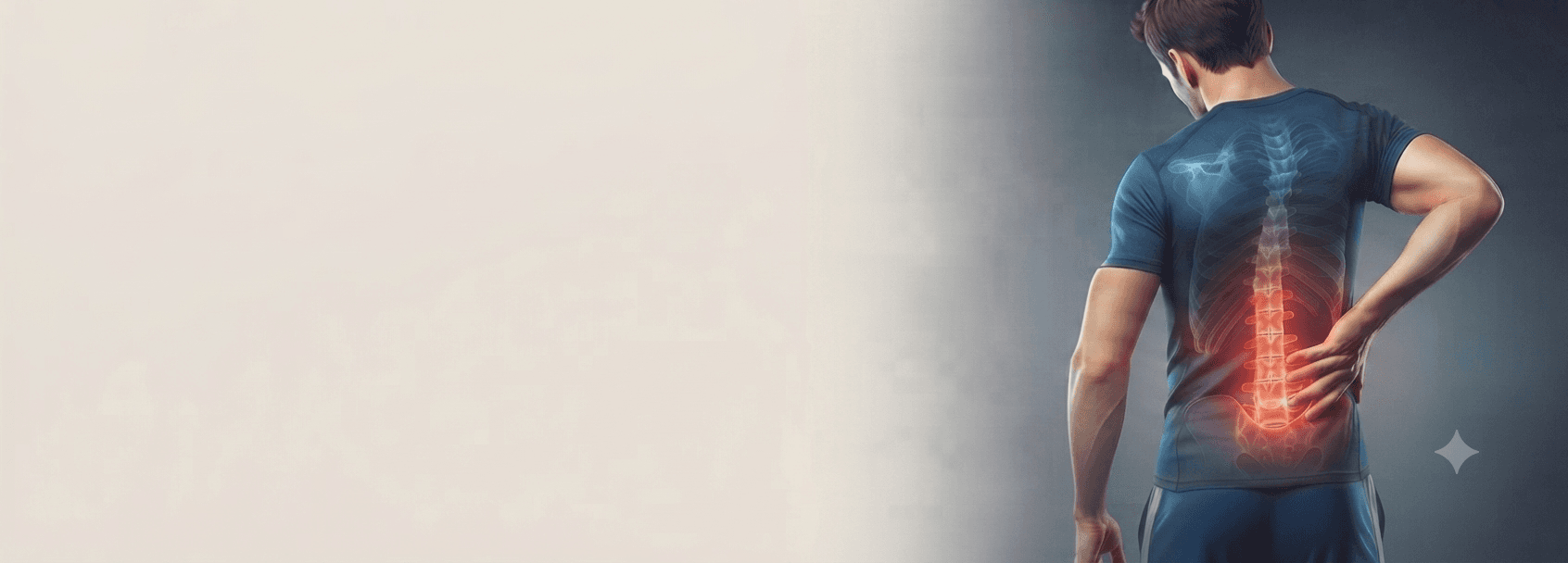
The most common structural cause is disc degeneration; the natural cushioning between vertebrae wears down with age, reducing height and shock absorption. When the inner material of a disc pushes through its outer layer and presses against a nerve, it is called a herniated or slipped disc. The narrowing of the canal through which the spinal cord passes, known as spinal stenosis, compresses the nerves inside and is a frequent cause of leg pain and weakness in older adults.
Poor posture sustained over years of desk work or driving places chronic load on the spinal muscles and discs. Osteoporosis weakens the vertebrae and makes them prone to compression fractures that produce sudden, severe mid-back pain. Sports injuries, road accidents, and repetitive physical strain cause acute structural damage. Scoliosis and kyphosis are abnormal spinal curvatures that generate chronic pain and, in severe cases, affect lung and digestive function.
Pain that is managed only with over-the-counter medication without addressing the underlying cause tends to worsen. The disc or structural problem continues to progress.
Nerve compression that is not treated can cause permanent damage such as loss of sensation, weakness in the arms or legs, and in severe cases, loss of bladder or bowel control. Prolonged pain restricts movement, which weakens the muscles that support the spine and makes the problem harder to resolve. Reduced mobility and disrupted sleep from chronic back pain affect work, mental health, and relationships. Surgery that is eventually needed on a long-neglected case is more complex and carries higher risk than earlier intervention.

Treatment is guided by the type, location, and grade of the condition, along with the patient’s age, health, and how long symptoms have been present. Most spinal conditions are treated without surgery.
Physiotherapy and rehabilitation is the first-line treatment for the majority of back and spine conditions. A structured program builds core muscle strength, improves flexibility, corrects posture, and reduces pressure on the affected spinal structures. Physiotherapy is available on-site at CK Birla Hospital and is integrated with medical treatment from the outset rather than as an afterthought.
Pain Management Injections including epidural steroid injections, nerve root blocks, and facet joint injections deliver anti-inflammatory medication directly to the source of pain. They are used when physiotherapy alone has not produced enough relief and as a bridge to recovery during acute flare-ups.
Posture Correction and Ergonomic Guidance addresses the root cause in patients whose pain originates from sustained poor positioning at work or during sleep. Correction of posture reduces mechanical load on the spine and prevents recurrence.
Lifestyle Modification including weight reduction, stopping smoking, and modification of physical activity plays a direct role in long-term spine health. Excess body weight increases compressive load on lumbar discs; smoking accelerates disc degeneration measurably.
Microdiscectomy removes the portion of a herniated disc pressing on a nerve. It is the standard surgical treatment for sciatica caused by disc herniation that has not responded to conservative management. Most patients go home within 24 hours and return to light activity within 2 to 4 weeks.
Spinal Decompression (Laminectomy) removes a portion of the vertebral arch to relieve pressure on the spinal cord or nerve roots in spinal stenosis. It is performed with or without fusion depending on the degree of spinal instability.
Spinal Fusion Surgery permanently joins two or more vertebrae to eliminate motion at an unstable or painful segment. It is used for degenerative disc disease, spondylolisthesis, and post-decompression instability.
Disc Replacement Surgery (Artificial Disc Replacement) replaces a degenerated disc with an artificial implant that preserves motion at that segment. It is an alternative to fusion for suitable candidates with single or two-level cervical or lumbar disc disease.
Endoscopic Spine Surgery uses a small camera and instruments passed through a narrow tube to decompress nerves or remove disc material with minimal tissue disruption. Post-operative pain is reduced and recovery is faster than open approaches.
Vertebroplasty and Kyphoplasty are minimally invasive procedures for osteoporotic compression fractures. Cement is injected into the fractured vertebra to stabilise it and relieve pain. Kyphoplasty also uses a balloon to restore vertebral height before cement is introduced.
Maintain a healthy weight. Even a modest reduction lowers the compressive load on lumbar discs and facet joints. Build core strength through regular exercise; a strong core reduces the burden placed on the spine during daily activity. Set up your workstation with the monitor at eye level, lumbar support in the chair, and feet flat on the floor. Take regular breaks from prolonged sitting, which increases intradiscal pressure more than standing or walking. Lift by bending the knees rather than the back. When back pain begins, have it assessed early rather than waiting for it to become persistent; most structural problems that are caught early respond well to non-surgical treatment.
The consultation covers the onset, character, and distribution of pain, any neurological symptoms such as numbness, tingling, or weakness in the limbs, and how symptoms affect daily life. A physical and neurological examination assesses spinal range of motion, nerve root tension signs, reflexes, and muscle strength.
X-ray of the spine shows vertebral alignment, bone density, disc space height, and spinal curvature. It is the first imaging investigation for most presentations. MRI provides detailed images of the discs, nerve roots, spinal cord, and surrounding soft tissue and is the investigation of choice for suspected disc herniation, nerve compression, or spinal cord involvement. CT scan gives precise bone anatomy for surgical planning. Nerve conduction studies and electromyography assess specific nerve pathways when the symptom pattern suggests nerve root or peripheral nerve involvement. Bone density scan (DEXA) is used when osteoporosis is suspected as a contributing factor in vertebral compression fractures.
Bring any previous imaging including X-rays or MRI scans and reports to the first consultation, along with a list of current medications including blood thinners and supplements. Inform the specialist of any previous back surgeries, steroid injections, or prolonged anti-inflammatory use, as these affect treatment decisions.
If surgery is planned, the specialist advises on stopping blood-thinning medications at a specific interval before the procedure, fasting requirements, and bowel preparation where relevant. Arrange for someone to accompany you to and from the hospital. Stop smoking at least 6 weeks before elective spine surgery; smoking impairs bone healing and increases the risk of post-operative complications.
After minimally invasive surgery including microdiscectomy or endoscopic decompression, most patients are mobile on the day of or the day after surgery and discharged within 24 to 48 hours. Avoid lifting, bending, and twisting for at least 4 to 6 weeks. Walk from the first post-operative day, starting with short distances and building week by week.
After spinal fusion, recovery is longer. Avoid rotational stress on the spine for the first 3 months. Bone healing across the fused segment takes 3 to 6 months, and return to physically demanding work or sport is assessed at the 3-month review.
For non-surgical treatment, continue physiotherapy for the full duration the treating team recommends. Stopping as soon as pain improves is the most common reason for relapse. Report new neurological symptoms such as weakness, numbness, or loss of bladder or bowel control. These should be promptly reported regardless of when they appear in the recovery period.
Physiotherapy and pain injections produce improvement over weeks to months; most patients reach meaningful pain reduction within 6 to 12 weeks of starting a structured programme. Microdiscectomy allows return to light activity within 2 to 4 weeks and most occupational activity within 6 weeks. Spinal fusion requires 3 to 6 months before the spine is stable enough for full activity. During recovery, sleep on a firm, supportive mattress in a position that keeps the spine neutral. Alternate between sitting, standing, and walking throughout the day rather than staying in one position for hours. Take prescribed pain medication on schedule rather than waiting for pain to build, as controlled pain supports earlier mobilisation and faster recovery overall.
Slip Disc (Herniated Disc): The inner gel of a spinal disc pushes through its outer casing and presses against a nerve root, causing back pain, shooting leg pain, and numbness or tingling in the limbs.
Sciatica: Pain that travels from the lower back through the buttock and down one leg, caused by compression of the sciatic nerve. It is most often a symptom of a herniated disc or spinal stenosis rather than a standalone diagnosis.
Spinal Stenosis: Narrowing of the spinal canal that compresses the spinal cord or nerve roots. It produces leg pain, weakness, and pain that improves with sitting or bending forward which is a characteristic pattern that helps distinguish it from disc herniation.
Degenerative Disc Disease: Age-related breakdown of the spinal discs that reduces their cushioning function. It causes chronic lower back pain and stiffness, particularly after periods of inactivity.
Scoliosis and Kyphosis: Abnormal lateral or forward curvature of the spine. Scoliosis is most commonly found in adolescents; kyphosis causes a rounded upper back. Both cause chronic pain and in severe forms, affect lung capacity.
Osteoporosis-Related Back Pain: Vertebral compression fractures caused by thinning of the bone, producing sudden onset upper or mid-back pain. Most common in post-menopausal women and older adults.
Postural Back Pain: Chronic muscular strain caused by sustained poor posture at a desk, in a driving position, or during sleep. Among the most common and most preventable causes of back pain seen in outpatient practice.
Sports and Trauma-Related Injuries: Acute ligament sprains, muscle tears, disc injuries, and vertebral fractures from falls, road accidents, or repetitive physical strain in sport or work.
Back pain that persists beyond 2 to 3 weeks without improvement, pain that travels down the leg, pain with numbness or weakness in the limbs, or back pain with any change in bladder or bowel control needs prompt specialist assessment.
No. The majority of back and spine conditions respond to physiotherapy, pain injections, and lifestyle changes. Surgery is considered when non-surgical treatment has not produced adequate improvement after a reasonable period, or when nerve compression is severe or worsening.
Acute postural back pain can resolve within 4 to 6 weeks with physiotherapy. Chronic disc disease or nerve compression may require 3 to 6 months of non-surgical treatment. Recovery after minimally invasive surgery runs 4 to 6 weeks; after spinal fusion it runs 3 to 6 months.
Many disc herniations reduce in size as the disc material is gradually reabsorbed. Physiotherapy and pain management resolve most slipped disc cases without surgery. Surgery is indicated when neurological symptoms are severe or worsening, or when 6 to 12 weeks of non-surgical management has not produced enough improvement.
Yes. Physiotherapy after spine surgery is a standard part of recovery. It starts at the time the operating surgeon specifies, typically 4 to 6 weeks post-operatively, and is not optional — it protects the repair and reduces the risk of recurrence.