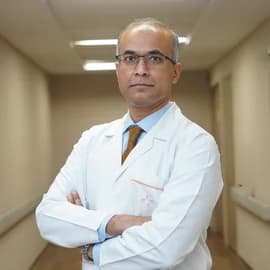
Cardiac Surgeon
M.Ch. (Cardiovascular & Thoracic Surgery), MS (General Surgery) Associate Director – Cardiothoracic & Vascular Surgery
24+ Years Experience
Location: Delhi
When medication, pacemakers, or other standard treatments stop being enough, a heart transplant starts to come up in conversation. Most patients reach this serious stage gradually, as symptoms worsen over time and the heart struggles harder to pump enough blood to meet the body’s needs.
A heart transplant calls for a surgeon skilled in the operation and genuinely invested in the years of followup after it. At the CK Birla Hospital, our transplant cardiologists, cardiothoracic surgeons and other specialists work as one team to see patients through both the surgery and the recovery that follows.
A heart transplant doctor is a cardiac surgeon trained specifically in replacing a failing heart with a healthy donor heart. They are also referred to as cardiothoracic surgeons or heart surgeons. There are also transplant cardiologists, who manage a patient’s care before and after surgery but don’t perform the surgery itself.
Before surgery, they evaluate whether a transplant is even the right route, compared to medication, a pacemaker or a mechanical heart pump. After surgery, they monitor closely for organ rejection, infection, and how well the new heart is functioning.
Before recommending a transplant, cardiothoracic surgeons or heart surgeons suggest certain tests to confirm how much the heart has weakened and whether the patient’s body can handle the surgery. These diagnostic tests are:
Doctors don’t directly treat every patient with a transplant. Heart Transplant Treatment usually progresses in stages, starting with less invasive options:
At the CK Birla Hospital, Delhi, patients receive comprehensive care from an experienced healthcare team that includes cardiac surgeons, transplant physicians, rehabilitation professionals and other specialists.
Our cardiology department is equipped to handle both routine heart conditions and complex, high-risk cases such as transplants, with close coordination between specialists at every stage.
We offer:
For patients across Delhi, this makes the CK Birla Hospital a dependable option when a heart transplant or advanced cardiac care is needed.
Coming prepared for your first consultation helps the doctor understand your condition faster:
If you are suffering from heart-related issues, it is worth having a proper conversation with a heart specialist before symptoms progress further.
The cardiology team at the CK Birla Hospital, Delhi, can help understand where you stand and what your treatment options look like. You can schedule a consultation to get expert advice about your heart health.
When medication, pacemakers, or other standard treatments stop being enough, a heart transplant starts to come up in conversation. Most patients reach this serious stage gradually, as symptoms worsen over time and the heart struggles harder to pump enough blood to meet the body’s needs.
A heart transplant calls for a surgeon skilled in the operation and genuinely invested in the years of follow up after it. At the CK Birla Hospital, our transplant cardiologists, cardiothoracic surgeons and other specialists work as one team to see patients through both the surgery and the recovery that follows.
