Filter :
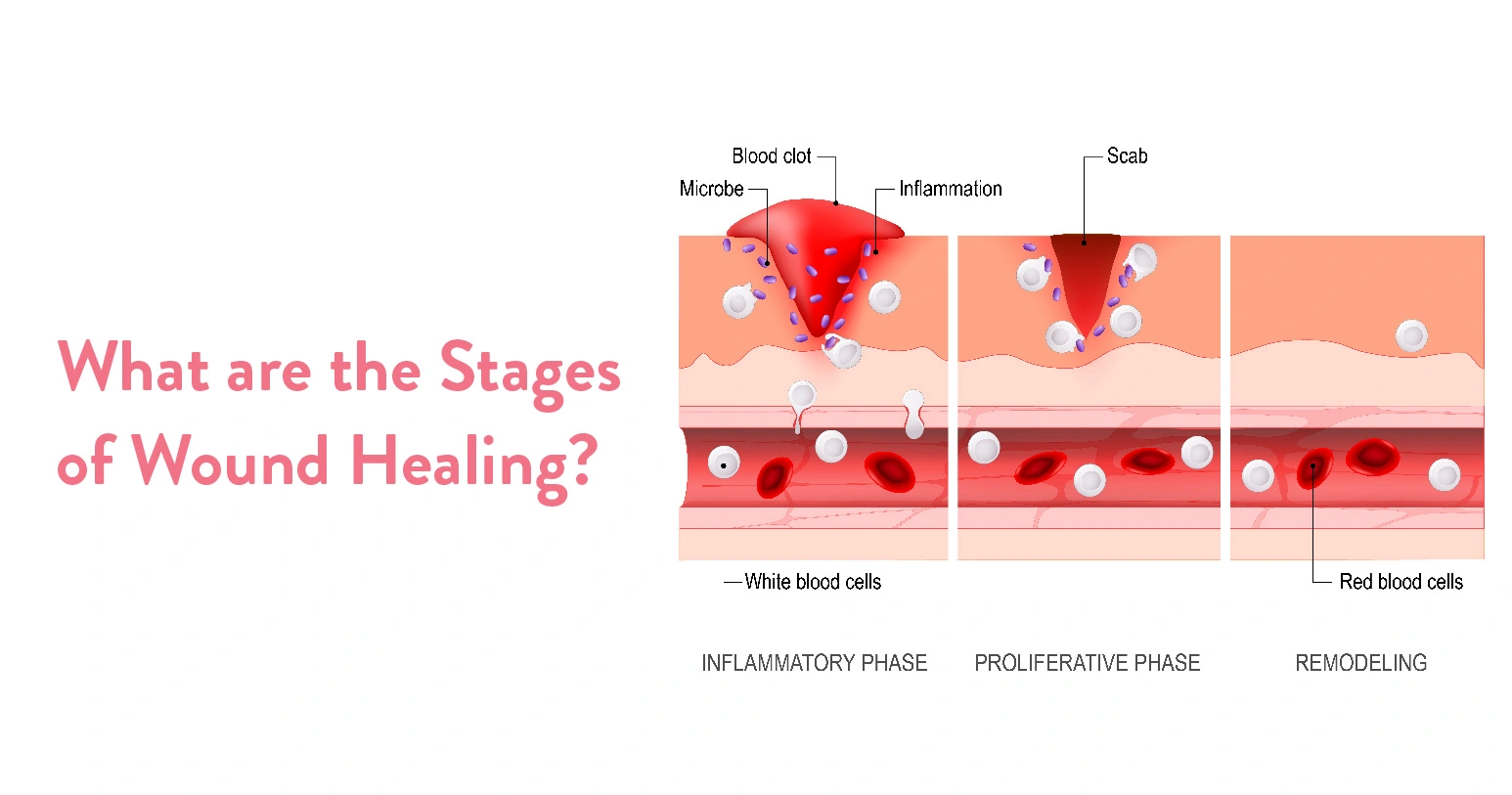
Have you ever wondered what happens to your body when you get a cut? The wound heals, but that’s not magic. Wound healing is a natural physiological process. It starts immediately after your body is scratched and continues until the wound is successfully healed.
So, what are the stages of wound healing, and how does your body manage such a fantastic feat? This blog aims to highlight the fascinating science behind how wounds heal.
Table of Contents
Wound healing is a normal biological process. It aims at restoring the integrity of the skin and underlying tissues. The process is categorised into two parts: –
However, various factors are responsible for how effectively a wound heals, including age factor, overall health, and nutritional status.
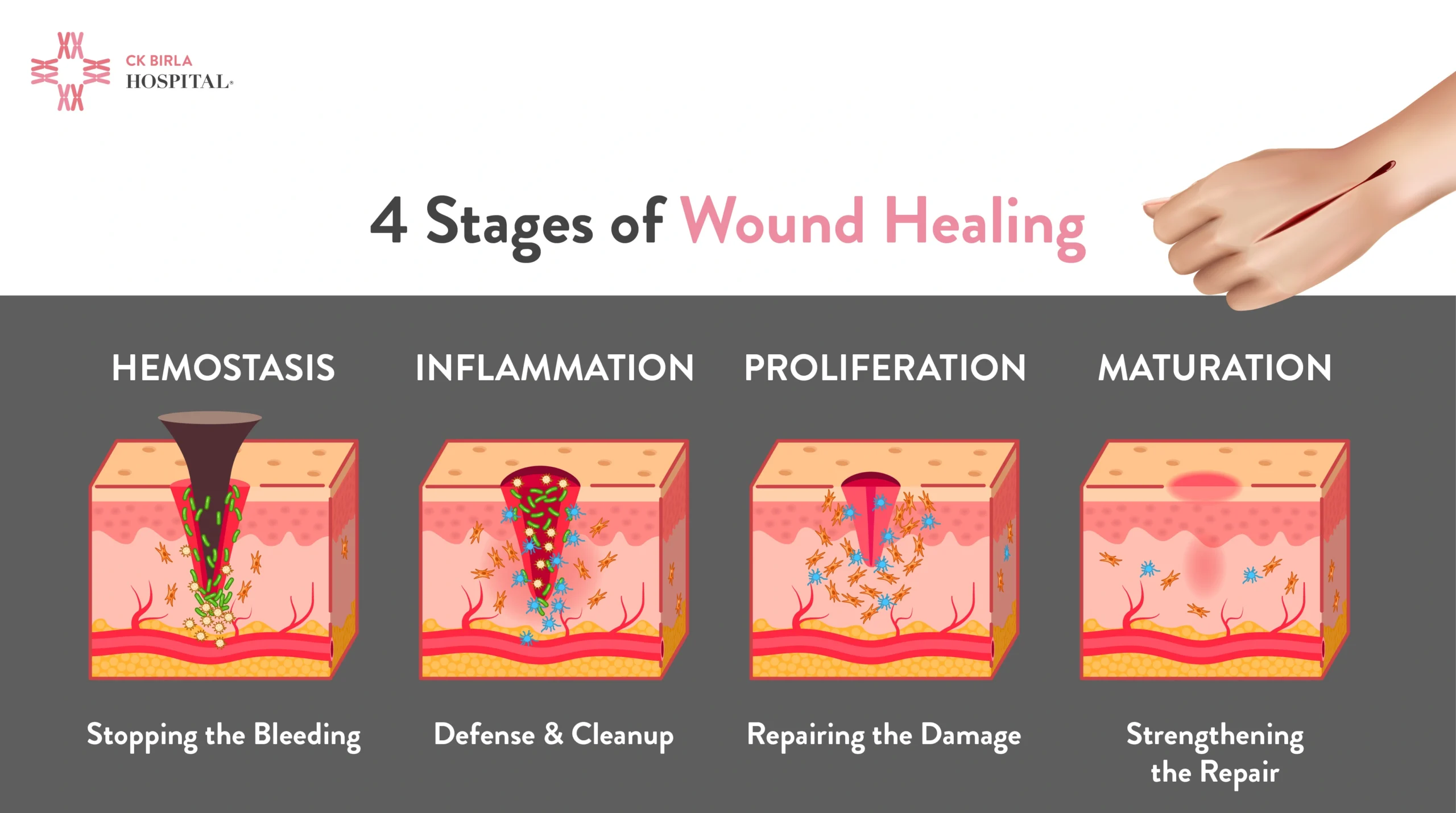
The first stage of wound healing begins immediately after the injury. When skin or tissue is damaged, blood vessels in the area constrict to limit blood flow. This process is called vasoconstriction.
At the same time, blood clotting factors are activated. Platelets collect to form a temporary plug that seals the wound. This process is known as hemostasis, which prevents further blood loss and serves as the basis for healing.
After the first stage, the body enters the inflammatory phase, which typically lasts a few days. In this stage, the body focuses on defending the wound site from infection and removing dead cells, bacteria, and debris. Inflammation is essential to healing the wound properly. During this process, you may experience some uncomfortable symptoms, such as redness, swelling, warmth, and pain.
Tissue rebuilding begins in the third stage. This phase usually lasts a few weeks, depending on the size, condition, and severity of the wound. During this Phase, the body focuses on healing and covering the wound with new tissue.
In the fourth stage of wound healing, maturation, which is called the remodelling phase, can last for a few months to years. In this process, your new tissue continues to strengthen, become flexible, and mature. Although the wound is closed, it is still fragile and requires time to regain its full integrity.
During these stages, your wound may look raised and red, but it becomes smaller as new tissue forms. You need to take care of your wound by keeping the area moist and clean. For a wound to heal successfully, all four stages must occur in the proper sequence and time frame.
Wound healing is a biological yet complex process. Your body undergoes four stages of healing, including hemostasis, inflammation, proliferation, and maturation. Each stage plays a vital role, from minimising the risk of infection to successful healing. Understanding these stages not only allows people to take care of their wounds but also recognise the signs of abnormal healing that may require medical intervention.
Due to poor blood circulation, wound healing may delay diabetes. Actually, it limits oxygen and nutrients reaching the wound. High blood sugar impairs immune function and damages blood vessels. It can also slow down the healing process. Additionally, nerve damage (neuropathy) in diabetics can prevent individuals from noticing and properly treating wounds. It leads to infections and complication.
To Accelerate wound healing, keep the wound clean and moist by applying proper dressings to prevent infection and speed healing. Eat a healthy diet rich in vitamins, especially vitamin C and zinc. It helps to aid tissue repair. Stay hydrated to improve blood circulation. Avoid smoking, and manage any underlying conditions such as diabetes. Consult a healthcare provider for specialised care if needed.
A wound is healing if you notice reduced redness, swelling, and pain over time. The wound should gradually shrink in size as new tissue forms, and any discharge should decrease. The formation of a scab or pinkish granulation tissue is a good sign, along with the edges of the wound pulling together. If the wound remains free of excessive pain, odour, or pus, it is likely to heal properly.
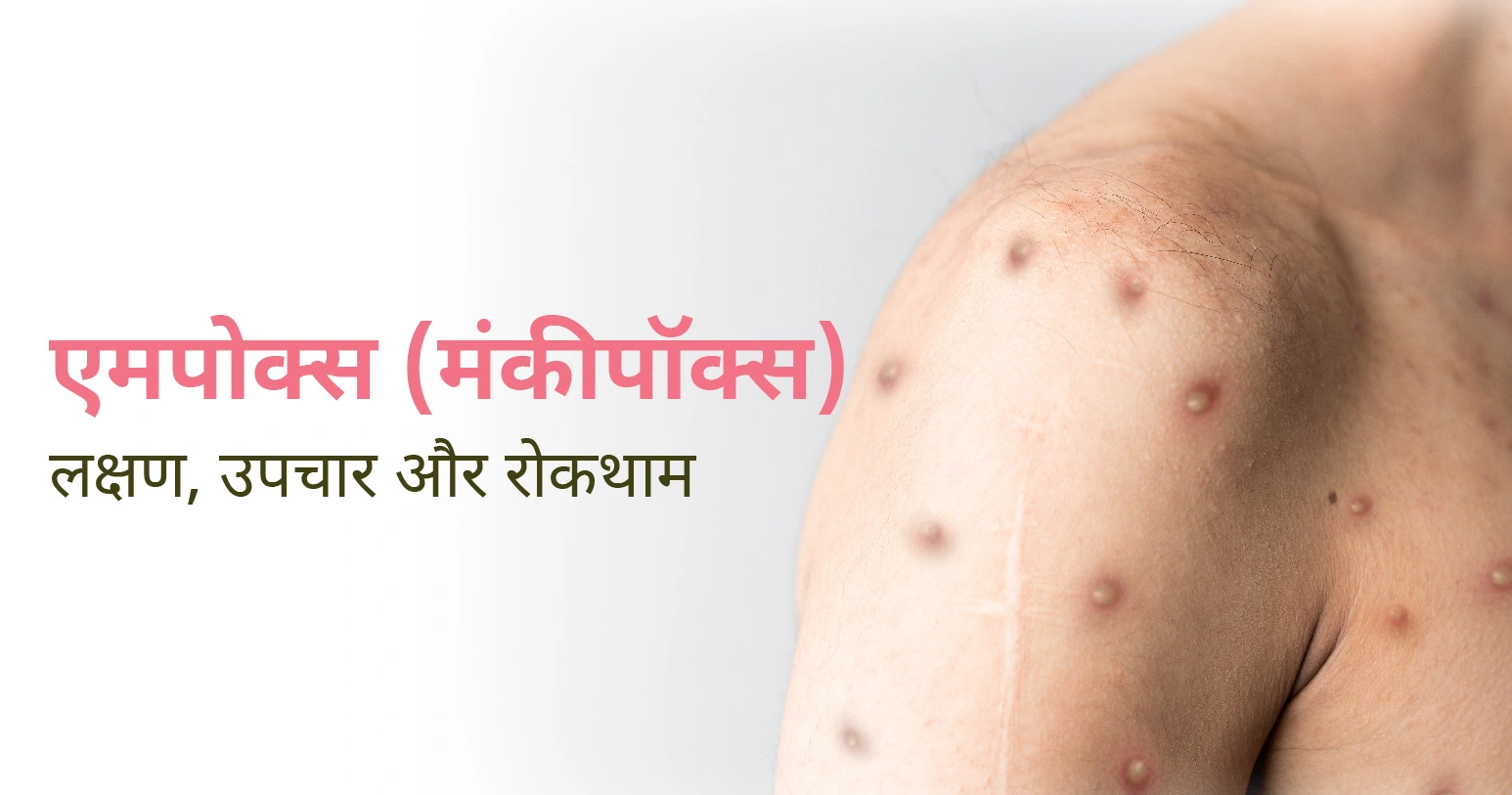
कोरोनावायरस के बाद अब हर तरफ मंकीपॉक्स वायरस की चर्चा हो रही है। यह एक संक्रामक रोग है जो एमपॉक्स वायरस के कारण होता है। यह मनुष्यों और कुछ जानवरों में हो सकता है। कोरोनावायरस की तरह कुछ सावधानियां बरतकर इस संक्रामक रोग से भी बचा जा सकता है।
बिलकुल सही कहा गया है कि “रोकथाम हमेशा इलाज से बेहतर होती है”, खासकर जब आप नहीं जानते कि वायरस कितना घातक है और इसका इलाज कैसे किया जाए। जैसे-जैसे भारत में एमपॉक्स (मंकीपॉक्स) के मामले बढ़ रहे हैं, वायरस के बारे में डर और मिथक भी उतनी ही तेजी से फैल रहे हैं।
इससे हम अनिश्चित हो जाते हैं कि किस सूचना पर विश्वास करें और किसपर नहीं। सही सूचना नहीं मिलने से भ्रम, निराशा और घबराहट होती है। इसलिए, यह समझना महत्वपूर्ण है कि मंकीपॉक्स वायरस क्या है। साथ ही, इसके लक्षण, कारण और रोकथाम को समझना भी आवश्यक है ताकि हम खुद को इससे बचा सकें।
Table of Contents
एमपॉक्स एक संक्रामक रोग है जो मंकीपॉक्स वायरस (एमपीएक्सवी) के कारण होता है। यह वायरस चेचक से काफी मिलता-जुलता है। इससे लाल धब्बे, छाले, उभार और फ्लू जैसे लक्षण अनुभव होते हैं। यह वायरस जानवरों या मंकीपॉक्स से पीड़ित लोगों के निकट संपर्क से फैलता है। यह यात्रा और जानवरों के संपर्क से भी फैल सकता है।
विश्व स्वास्थ्य संगठन (WHO) के अनुसार, मंकीपॉक्स पॉक्सविरिडे परिवार में जीनस ऑर्थोपॉक्सवायरस की एक प्रजाति है, जिसमें वेरियोला, वैक्सीनिया और काउपॉक्स भी होते हैं।
मंकीपॉक्स वायरस का पहला मामला 2022 में मध्य और पश्चिमी अफ्रीका जैसे अफ्रीकी क्षेत्रों में सामने आया था और यह आज यह पूरी दुनिया में ख़तरा बना हुआ है। एमपॉक्स को दो भागों में बांटा गया है जिसमें पहले (क्लेड I) की उत्पत्ति मध्य अफ़्रीका से हुई और दूसरा (क्लैड II) पश्चिमी अफ़्रीका से है।
संक्रमित होने के 1 से 21 दिन बाद तक आपको इसके लक्षण दिख सकते हैं। इसके लक्षण 2 से 4 सप्ताह तक रहते हैं, लेकिन कमज़ोर इम्युनिटी वाले लोगों में अधिक समय तक रह सकते हैं।
इसके लक्षणों में निम्न शामिल हैं:
इसके अन्य लक्षणों में प्रभावित क्षेत्र में दर्द और खुजली होना शामिल हैं। एमपॉक्स की शुरुआत चपटे घावों से होती है जो बाद में मवाद से भरे फफोले में बदल जाते हैं।
ये लक्षण शरीर के अलग-अलग अंगों में दिखाई दे सकते हैं जैसे कि चेहरा, मुँह, गला, हथेली, पैरों के तलवे, ग्रोइन, जननांग क्षेत्र और गुदा आदि। यह शरीर के अन्य हिस्सों में भी हो सकता है।
एमपॉक्स के उपचार का उद्देश्य प्रभावित क्षेत्र की देखभाल करना, दर्द का प्रबंधन करना और जटिलताओं को रोकना है। लक्षणों को प्रबंधित करने और आगे की समस्याओं से बचने के लिए प्रारंभिक देखभाल आवश्यक है।
इसके अलावा, एमपॉक्स वैक्सीन संक्रमण को रोकने में मदद कर सकता है, खासकर प्रकोप के दौरान उन व्यक्तियों में जिन्हें इस संक्रमण होने का ख़तरा सबसे अधिक होता है। एमपॉक्स के लिए उच्च जोखिम वालों में शामिल हैं:
आप एमपॉक्स (पोस्ट-एक्सपोज़र प्रोफिलैक्सिस) वाले किसी व्यक्ति के संपर्क में आने के बाद भी टीका प्राप्त कर सकते हैं। संपर्क के कुछ दिनों के भीतर टीका लेने की सिफारिश की जाती है। अगर आप में लक्षण विकसित नहीं हुए हैं, तो आप एक्सपोज़र के 14 दिन बाद तक भी टीका ले सकते हैं।
अधिकांश लोग 2-4 सप्ताह के भीतर इस वायरस से ठीक हो जाते हैं। इसके आलावा, आप दूसरों तक एमपॉक्स के संचरण (Transmission) को रोकने के लिए निम्न का पालन कर सकते हैं:
मंकीपॉक्स को समझना और बचाव के उपायों का पालन करना अपनी और दूसरों की सुरक्षा के लिए महत्वपूर्ण है। प्रारंभिक देखभाल, टीकाकरण और सिंपल हाइजीन प्रैक्टिसेज, मंकीपॉक्स के लक्षणों को मैनेज करने और वायरस के प्रसार को रोकने में मदद कर सकती हैं।
नहीं, मंकीपॉक्स शायद ही कभी घातक होता है और अधिकांश लोग कुछ ही हफ्तों में ठीक हो जाते हैं। हालाँकि, कुछ मामलों में, यह जटिल हो सकता है, खासकर उन लोगों में जिनकी इम्युनिटी कमज़ोर है, जैसे गर्भवती महिलाएं, छोटे बच्चे या बूढ़े व्यक्ति।
यह किसी संक्रमित व्यक्ति या जानवर के निकट संपर्क से या दूषित सतहों के माध्यम से फैलता है।
इसका कोई विशिष्ट इलाज नहीं है, लेकिन लक्षणों का इलाज किया जा सकता है और अधिकांश लोग अपने आप ठीक हो जाते हैं।
नहीं, मंकीपॉक्स को महामारी नहीं माना जाता है, लेकिन इसका प्रकोप हो सकता है।
Yes, the liver can heal itself. As it regenerates, common signs include more energy, less abdominal pain, clearer thinking, improved skin and eye colour, better appetite, and improving liver enzyme levels on blood tests. Mild damage such as fatty liver can begin improving within a few weeks of lifestyle changes; more advanced damage may take longer and, in the case of cirrhosis, may not fully reverse.
Like a cut on your skin healing over time, your liver can regenerate its own cells after damage from alcohol, poor diet, viral infection, or toxin exposure. Existing liver cells enlarge to compensate for the damage, and new cells then grow and multiply in the affected area which is why the liver is often called the body’s most resilient organ.
Table of Contents
When your liver regenerates, you may notice:
| Indicator | During liver damage | During liver healing |
| Energy levels | Persistent fatigue | Increased energy and alertness |
| Skin and eyes | Yellowish tinge, dull complexion | Clearer, natural colour returning |
| Digestion | Poor appetite, bloating | Steadier appetite, less bloating |
| Mental state | Brain fog, irritability | Improved clarity and mood stability |
| Liver enzymes (ALT, AST) | Elevated on blood tests | Gradually trending toward normal |
| Condition | Approximate healing time |
| Mild fatty liver | 2–4 weeks with diet and lifestyle changes |
| Alcohol-related liver damage | Weeks to several months of sustained abstinence |
| Viral hepatitis (treated early) | Weeks to a few months |
| Fibrosis / early cirrhosis | Several months to years; partial improvement |
| Advanced cirrhosis | Not fully reversible, but progression can be managed |
Individual healing time varies by age, overall health, and how long the damage has been present. Always confirm progress with your doctor rather than relying on symptoms alone.
Ultrasound reports often grade a fatty liver from 1 to 3 based on how much fat has built up in the liver cells. The grade is a useful starting point, but it does not by itself show whether there is inflammation or scarring, so it should always be read alongside your liver function test results.
| Grade | What it means | Typical outlook with treatment |
| Grade 1 (mild) | Roughly 5–33% fat in liver cells; earliest and most responsive stage | Often improves with a 7–10% weight loss, regular exercise and diet change |
| Grade 2 (moderate) | Around 33–66% fat; usually reflects longer-standing insulin resistance | Can also improve significantly, though medical supervision is advised |
| Grade 3 (severe) | More than 66% fat; often overlaps with active inflammation (NASH) | Fat content can fall substantially, but any scarring improves slowly and not always completely |
None of these grades are a permanent verdict: even Grade 3 fatty liver can improve with sustained weight loss, exercise and good control of diabetes, though scarring — if present — takes longer to resolve than fat alone. If your report shows Grade 2 or 3, book a liver function test and, where advised, a FibroScan at CK Birla Hospital to check for scarring before deciding on a treatment plan.
Cirrhosis is scarring that replaces healthy liver tissue, and established scar tissue does not disappear. What can improve, particularly in earlier (compensated) cirrhosis, is everything the scarring has crowded out: energy levels lift, appetite steadies, abdominal swelling (ascites) and leg swelling reduce, and jaundice fades as bilirubin processing improves. Removing the underlying cause stopping alcohol, treating viral hepatitis, or managing the metabolic condition behind it is what allows this partial recovery; the scarring itself is managed rather than reversed once it is advanced. Anyone with diagnosed cirrhosis should have their treatment plan reviewed by a gastroenterologist or hepatologist rather than relying on lifestyle changes alone.
If fatty liver was the underlying issue, healing usually shows up first as more stable energy and less discomfort under the right ribs, followed by improving results on follow-up liver enzyme tests. With sustained changes — cutting alcohol, added sugar, and processed fat — measurable improvement is common within 2–4 weeks, and imaging or blood work at a follow-up visit can confirm how much progress has been made.
Signs your liver is healing include more energy, less abdominal pain, clearer thinking, improved skin and eye colour, better sleep, and liver enzyme levels (ALT, AST, bilirubin) trending back toward normal on blood tests. Mild fatty liver damage can start improving within 2–4 weeks of quitting alcohol and improving diet; more advanced damage takes longer, and cirrhosis may not fully reverse but can be managed with ongoing care.
When alcohol was the cause, healing signs typically follow quitting or significantly cutting back:
Research has found that liver inflammation markers can improve measurably within two weeks of sustained abstinence, though full recovery from more significant damage takes longer (Kirpich & McClain, 2021). Even small amounts of alcohol can slow this process, so sustained abstinence — not just cutting back around a healing window — gives the liver the best chance to recover.
Stopping alcohol suddenly after heavy or prolonged use can cause withdrawal symptoms such as nausea, tremors, anxiety, and a raised heart rate, and in some cases withdrawal can be medically serious. Anyone who has been drinking heavily and wants to stop should speak with a doctor about doing so safely, rather than stopping abruptly without support.
ALT and AST (typically 4–36 IU/L for ALT and 5–30 IU/L for AST) are the two enzymes doctors watch most closely on a liver panel; reference ranges vary slightly by lab. Mild, short-lived rises are common — up to 30% of mild abnormal readings settle on their own within about three weeks — but a pattern of elevated results, rather than a single test, is what your doctor uses to judge whether the liver is genuinely healing. Repeat testing every few weeks, alongside the lifestyle changes below, is the most reliable way to track real progress.
The liver plays a central role in digestion, metabolism, and detoxification. Before looking at signs of healing, it helps to understand what causes damage in the first place. Main causes include:
Left unaddressed, liver damage can progress to:
Recognising the warning signs of liver damage supports earlier intervention. However, liver disease doesn’t always cause symptoms you can see or feel.
Seek urgent medical care if you notice: persistent jaundice, sudden confusion or drowsiness, marked swelling in the abdomen or legs, or blood in vomit or stool. These can signal advanced liver dysfunction and need same-day assessment.
If you’re experiencing any of these symptoms, consult a healthcare professional for evaluation.
If you begin to notice a surge in your energy levels, it may indicate that your liver is healing. As the liver regains its ability to detoxify and regulate bodily functions, you’ll likely feel more vibrant and less fatigued.
An enlarged liver (hepatomegaly) is a sign of an underlying condition — commonly fatty liver, hepatitis, alcohol-related damage or, less often, a heart or blood disorder — rather than a disease on its own. There is no single fixed timeline for it to shrink back to normal size: sudden, short-term swelling can settle within weeks of treating the trigger, while enlargement from a chronic condition improves more gradually as that condition is brought under control, and in some cases can be reversed or even fully resolved with sustained treatment. A doctor can only confirm your liver size is back to normal through an ultrasound or scan, so book a follow-up scan rather than judging by symptoms alone.
Recognising signs of healing matters, but actively supporting your liver matters just as much. Here’s how:
Getting treatment for liver disease can prevent liver failure and, in severe cases, save your life. It’s also possible to reverse many cases of liver damage — in many cases, the liver regenerates and heals within a few months. As it heals, you’ll typically notice positive effects throughout the body: more energy, better mental clarity, improved digestion, and healthier-looking skin. The sooner you address liver disease and take steps to support healing, the better your chances of reversing the damage.
If you’re noticing warning signs rather than healing signs, our gastroenterology & hepatology team can help confirm what’s going on and plan the right next step.
To gain weight in a healthy way, most people need to eat 300–500 extra calories a day above what they burn, paired with light strength training so the surplus builds muscle instead of fat. Below is a dietitian-designed 7-day Indian meal plan, safe weight-gain targets, and the foods to prioritise or avoid.
Gaining weight can be just as hard as losing it — low appetite, a fast metabolism, or an inconsistent routine all get in the way. This guide gives you a complete weight gain diet chart for both men and women, vegetarian and non-vegetarian, along with the science behind how many calories you actually need.
Table of Contents
Weight gain comes down to a calorie surplus: eating more than your body burns. Your daily calorie need depends on age, gender, height, and activity level — adult women typically need 1,600–2,400 kcal/day and men 2,000–3,000 kcal/day, with the higher end for people who are more physically active.
Athletes and people with physically demanding jobs may need 3,000+ kcal/day, while sedentary individuals typically need less than they assume.
Yes. When you consistently eat more calories than your body uses for maintenance, the surplus energy is stored — as muscle if you’re strength training, or as fat if you’re not. The Acceptable Macronutrient Distribution Range (AMDR) recommends adults get 45–65% of calories from carbs, 20–35% from fat, and 10–35% from protein.
| Calories | Carbs | Fat | Protein |
|---|---|---|---|
| 3,000 kcal | 338–488 g | 67–117 g | 75–263 g |
0.25–0.5 kg (0.5–1 lb) per week is the safe, sustainable rate. Gaining faster than this — through a large calorie excess or high-dose weight-gain products — usually adds fat rather than muscle, and puts extra strain on the heart and liver.
Pairing your calorie surplus with light strength work (bodyweight squats, push-ups, resistance bands, 2–3x a week) helps direct those extra calories into muscle instead of fat storage. If you’re consistently eating more but not gaining — or losing weight unintentionally — see a physician rather than increasing intake further; this can point to an underlying issue like hyperthyroidism, malabsorption, or a chronic infection.
Also Read:Healthy Diet Chart for High Blood Pressure Patients
Men generally need a larger surplus (400–500 extra kcal/day) given higher average baseline calorie needs, while women often see steady gains with 300–400 extra kcal/day. Protein targets scale with body weight either way — aim for roughly 1.6–1.8 g protein per kg of body weight if you’re combining diet with strength training.
Both work equally well for weight gain. Vegetarians should lean on paneer, dal, tofu, soya chunks, full-fat milk, and nuts to hit protein targets; non-vegetarians can add eggs, chicken, and fish for additional variety. Swap 150g paneer or 50g soaked soya chunks for the meat/fish portion in any day of the chart above.
| Food | Serving | Approx. Calories | Why it helps |
|---|---|---|---|
| Ghee | 1 tbsp | 112 kcal | Adds fat-soluble vitamins; stir into dal, rice, roti |
| Peanut butter | 2 tbsp | 190 kcal | 8g protein; add to toast, smoothies, milk |
| Whole milk | 1 cup | 150 kcal | Protein + calcium; base for shakes |
| Almonds/nuts | ¼ cup | 170 kcal | 6g protein, 4g fibre — eat 2 handfuls daily |
| Full-fat paneer | 100 g | 265 kcal | High protein, versatile in curries |
| Bananas | 1 medium | 105 kcal | Fast carbs, pairs well with milk or nut butter |
Fried and ultra-processed snacks are calorie-dense but nutrient-poor. Prioritise whole foods — nuts, dairy, dal, whole grains — over chips, sugary drinks, and packaged snacks so your surplus comes with the vitamins and minerals your body also needs during weight gain.
|
Meal Time |
Calories (kcal) | rbs (g) | Protein (g) | Fat (g) | Examples |
| Breakfast | 500 | 60 | 25 | 20 | Oats + whole milk + nuts + fruit |
| Mid-Morning Snack | 300 | 35 | 10 | 15 | Peanut-butter toast + banana |
| Lunch | 700 | 80 | 35 | 25 | Rice/chapati + dal/chicken + veg + ghee |
| Afternoon Snack | 400 | 40 | 15 | 20 | Smoothie with yogurt, fruit, nut butter |
| Dinner | 600 | 60 | 30 | 20 | Chapati + paneer/fish + salad + oil |
| Evening Snack | 300 | 25 | 15 | 15 | Cottage cheese + dried fruit or nuts |
| Total/day | 2,800 kcal | 300 g | 130 g | 115 g | — |
A well-planned weight gain diet chart focused on nutrient-dense foods, balanced macros, and consistent strength training helps you gain lean muscle rather than fat. Always tailor your plan with a healthcare provider or dietitian, especially if you’re not seeing results despite consistent effort.
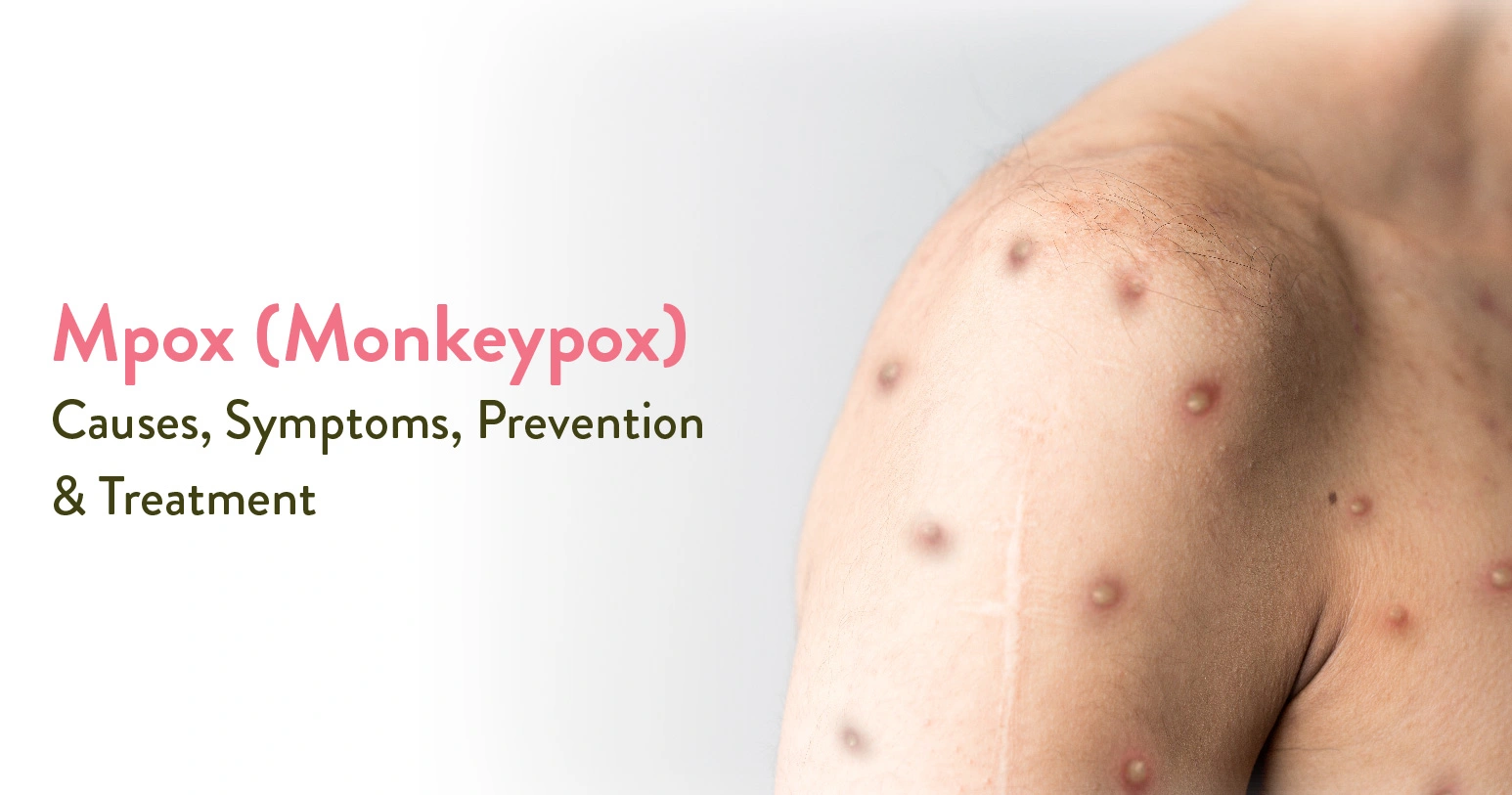
Prevention is always better than cure, especially when you don’t know how deadly the virus can be and how to treat it. As mpox (Monkeypox) cases rise in India, fear and myths about the virus are spreading at an equal pace.
This leaves us unsure of what to believe and not, which leads to confusion, frustration, and panic. Hence, it’s important to understand what the monkeypox virus is, its symptoms, causes, and prevention.
Table of Contents
According to WHO, monkeypox is a species of the Genus Orthopoxvirus in the Poxviridae family, which also has variola, vaccinia, and cowpox. The first case of the monkeypox virus was reported in 2022 in African regions, such as Central and Western Africa, and it continues to be a threat today.
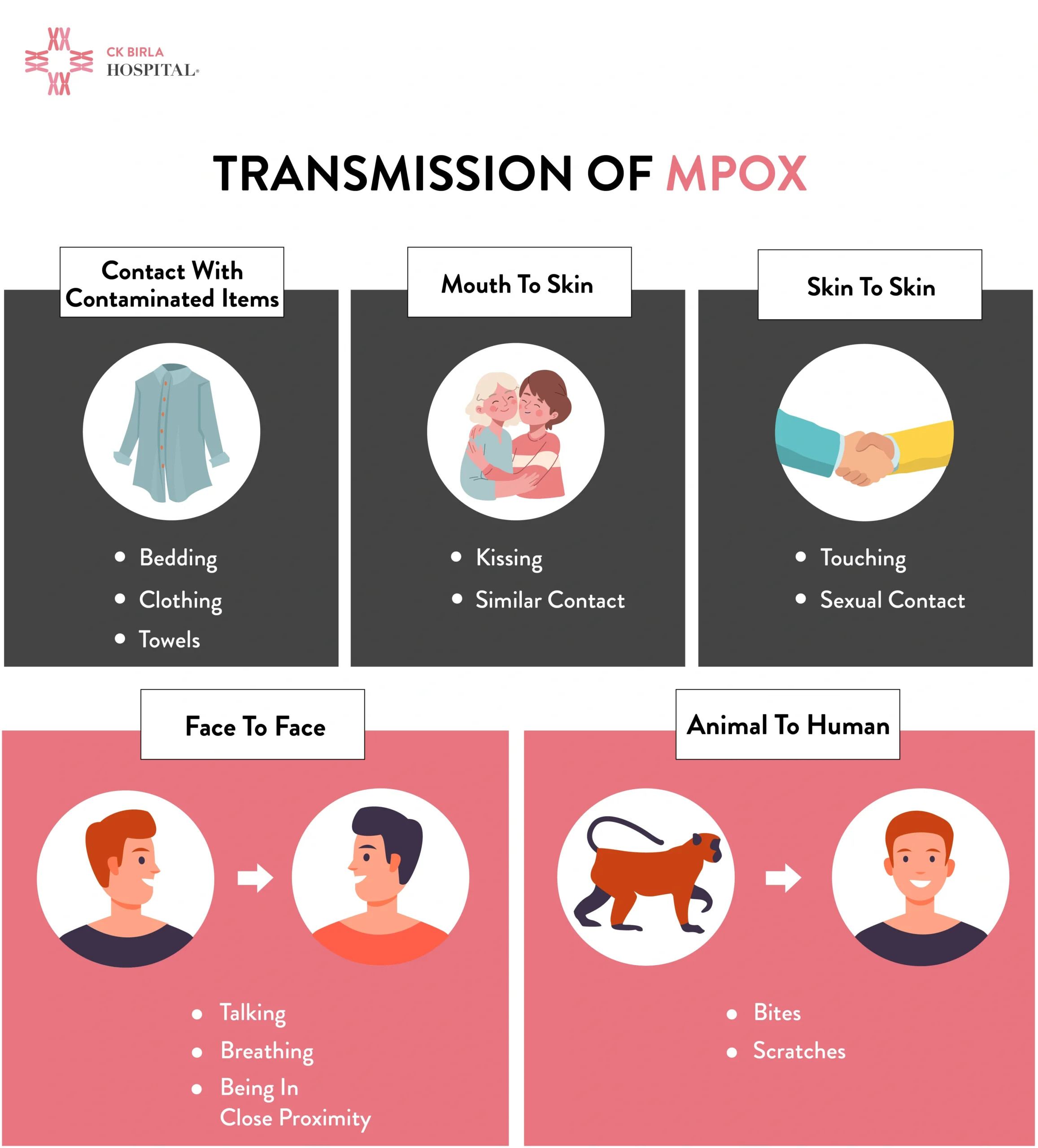
Simply put, the monkeypox virus spreads through close contact with an infected person or animal. Close contact includes:
Identifying monkeypox virus can be a challenge for you. Because other infections and conditions can also look similar, including chickenpox, bacterial skin infections, and sexually transmitted infections.
Tests are a key to getting optimal care early, which can prevent you from severe illness.
The aim of treating mpox is to care for the rash, manage pain, and prevent complications. Early care is essential for managing symptoms and avoiding further problems. Additionally, the mpox vaccine can help prevent infection, especially in high-risk individuals during outbreaks.
You can also receive the vaccine after being exposed to someone with mpox (post-exposure prophylaxis). It is recommended to take the vaccine within days of contact. If you haven’t developed symptoms, you can still receive the vaccine up to 14 days after exposure.
Most people will recover from this virus within 2-4 weeks. Additionally, you can follow these steps to prevent the transmission of mpox to others.
Understanding monkeypox and following preventive measures are key to protecting yourself and others. Early care, vaccination, and simple hygiene practices can help manage symptoms and prevent the spread of the virus.
No, monkeypox is rarely fatal, and most people recover within a few weeks. However, in some cases, it can be complicated, especially for those who have low immunity, like pregnant women or young children. Early treatment and proper care can help manage symptoms and reduce the risk of severe illness.
It spreads through close contact with an infected person or animal or through contaminated surfaces.
There is no specific cure, but symptoms can be treated, and most people recover on their own.
No, monkeypox is not considered a pandemic, but outbreaks can occur.
Table of Contents
When planning a holiday, special event, wedding, or party, one of the first questions that may come to your mind is when you will get your period. The frustration, severe pain, and discomfort associated with periods can ruin important moments. That’s why most women look forward to inducing their periods earlier to ensure they can fully embrace every moment of their celebrations.
Additionally, women who are undergoing fertility treatment may also want to have an early period. So, if you’re one of those looking for effective tips to get early periods, this blog is dedicated to you. In this blog, we’ll discuss the causes of delayed menstrual cycles and effective tips to induce menstrual early. So, let’s get started with the causes of delayed menstrual cycles.
According to the NICHD survey, it is projected that 14% to 25% of women of childbearing age experience menstrual irregularities. This includes those with menstrual cycles that are shorter or longer and heavier than normal, as well as those experiencing other issues such as abdominal cramps. Usually, the normal menstrual cycle period is 21 to 35 days. However, there are some most common factors that can cause delayed menstrual cycles, such as:
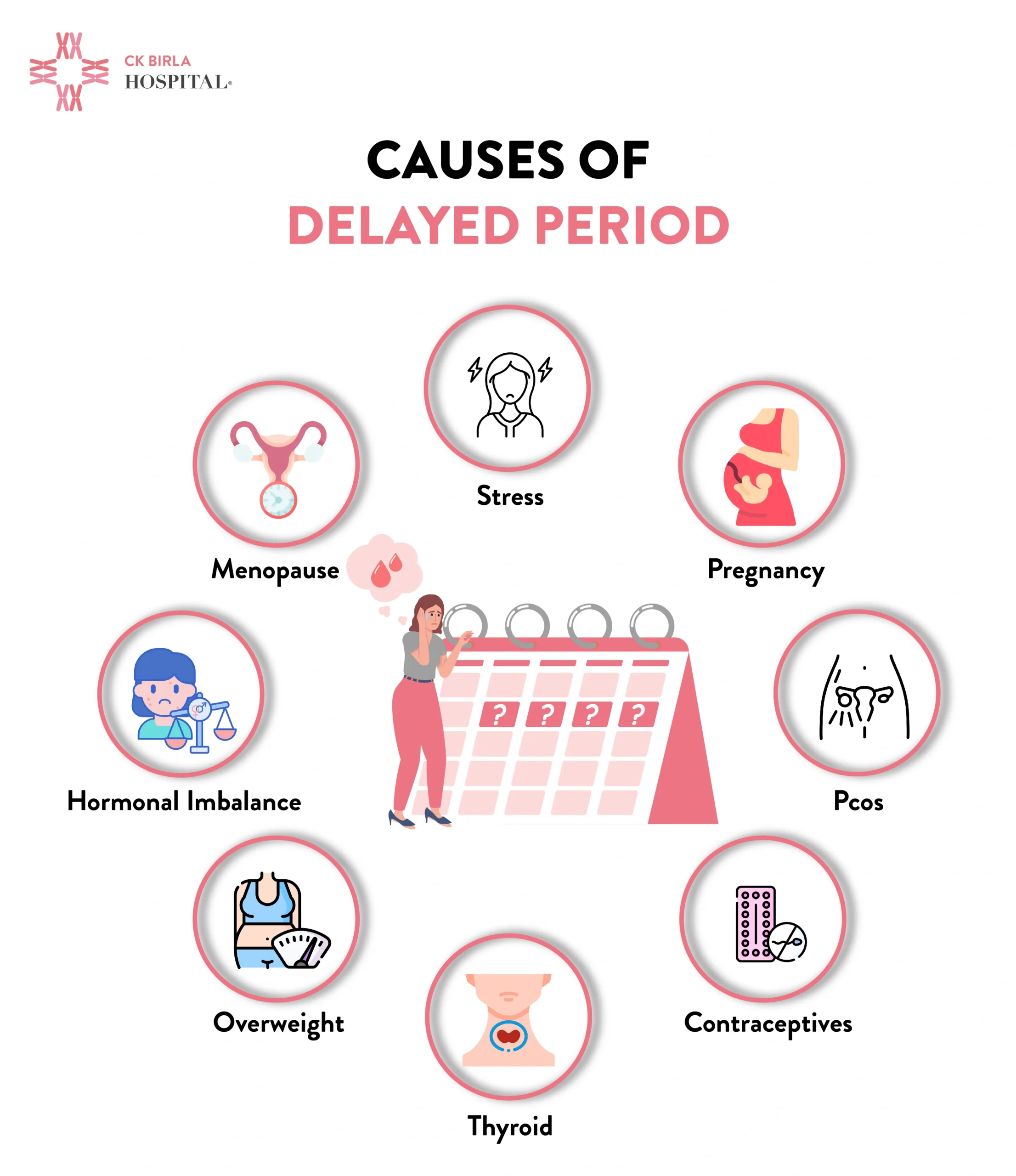
Additional factors that can cause menstrual irregularities include:
If you’re not taking any hormonal contraception, then you can naturally induce your period early by changing your lifestyle. Just simply, changing your exercise routine, eating and choosing the right fruits and vegetables of different colors, and taking steps to relieve stress and even sexual intercourse can also help you to get periods immediately. Let’s dive deeper into these points to get a better understanding.
Some studies have proven that gentle stretching and yoga can help relax abdominal muscles, potentially causing your period to start sooner. If you haven’t started exercising yet, consider beginning today. Regular exercise may help you to regulate your reproductive hormones, which leads to greater predictability in your menstrual cycle over time. However, everybody is unique. And you know your body best, so engage in whatever activity you feel is right for you.
The Centers for Disease Control and Prevention, recommends about 30 minutes of moderate-intensity aerobic exercise on most days of the week. If you do exercise intensely, you only need about 15 minutes a day, most days of the week. However, it has also been observed that people who play sports, engage in intensive exercise, and are competitive athletes are more likely to experience menstrual irregularities. So, if you’re an athlete or engaging in intensive workouts for professional purposes, you can consult with a gynaecologist to discuss your current training routine and its potential impact on your hormone levels.
Rising stress levels are a major cause of menstrual irregularities. This occurs because cortisol, a steroid hormone released in response to stress, can disrupt the menstrual cycle. High levels of stress hormones can delay your period. Therefore, it’s important to manage your stress level. Since outside factors influence stress, managing it can be challenging. If you find yourself in this situation, take a moment for yourself by doing small things that help you relax:
Although there is no scientific evidence that eating pineapple, ginger, turmeric, or foods rich in vitamin C is harmful during pregnancy, it is completely safe. So, if you want to induce your period, try to intake such things, such as:
You can intake ginger in any form. It can be eaten raw, added to your dish, or just made with ginger tea. It is said that ginger helps to induce menstruation by causing uterine contractions. Ginger has been used for healing menstrual pain or treating heavy menstrual bleeding.
Turmeric is said to regulate the menstrual cycle by affecting oestrogen and progesterone levels, thereby possibly inducing menstruation. Packed with curcumin, turmeric is known for its anti-inflammatory effects, which are highly being used in treating polycystic ovary syndrome (PCOS) and other reproductive health conditions.
Raw papaya may also help your period arrive faster. In 2021 a study conducted on rats, where found that extract from raw papaya seeds might have contraceptive effects. However, more research is needed to understand how it affects human hormones and reproduction.
There are no guaranteed ways to make the period come faster. But, doing the following things can help you to induce periods early, such as: doing exercise, trying relaxation methods, or having an orgasm can bring on the period a little faster.
There are no guarantees to start your period immediately, but a few things may help you with this. You can engage yourself in physical activity, breathing exercises, and a warm shower, which may help improve blood circulation. As mentioned above, you can also intake certain foods in your diet, like raw papaya, turmeric, ginger and vitamin C rich fruits.
If your period is delayed and you’re sexually active, take a pregnancy test. To help, try reducing stress, staying physically active, and consuming foods rich in vitamin C. If the issue continues, consult a healthcare professional or gynaecologist.
Raw papaya can help to stimulate menstruation, as it contains a huge amount of enzymes. However, it is not a specific timeframe for how quickly it will affect your cycle. It depends on person to person.
Table of Contents
In modern times, we are gradually consuming foods high in sugar, salt, fat, and carbohydrates. As a result, the consumption of unhealthy foods has increased significantly, contributing to various health issues such as constipation, obesity, diabetes, and other related conditions. But this is a short-term scenario. In the long run, people seek good quality grains that are rich in protein, fibre, and other essential micronutrients so that they can eat a proper and balanced diet. In pursuit of dietary balance, people have now rediscovered the importance and nutritional value of Pearl Millet a.k.a. Bajra.
Pearl millet (Bajra), an ancient grain, is regaining popularity after decades of being forgotten. Known for its incredible nutritional properties, millet (bajra) helps keep chronic disease at bay. With this new trend catching on, bajra which is packed with iron, protein, fibre, vitamins, magnesium, and all the best nutrients which were earlier ignored, will make an easy entrance into our kitchens, and eventually our body.
So, are you curious to know more about how bajra can help you lead a healthy life? Well, in this blog, we’ll explore what bajra or millet is, its nutritional value and key reasons for incorporating it into your daily diet. Let’s get started!
Pearl millet (bajra) is not only nutritious, and affordable, but it is also environmentally friendly and drought resistant. It is grown in tropical areas in Asia and Africa and is also known as poor people’s food due to its affordability and ease of production. Bajra is gluten-friendly and can be consumed by people with celiac disease. Packed with essential nutrients, like zinc, iron and magnesium, bajra can help with anaemia.
According to the American Diabetes Association (ADA), pearl millet contributes to the prevention of diabetes, as it releases less glucose in the blood over a longer period than commonly consumed rice. It also helps to control body weight, which is best for diabetic people. Not only this, but it also helps to enrich insulin sensitivity by decreasing triglyceride levels in the body. Additionally, many studies have proven that pearl millet/bajra is also beneficial for the prevention of cancer and bone repair and development.
Additionally, bajra serves various other health benefits. So, let’s dive deeper into this.
A study conducted on people between the ages of 50 and 65 found that women who preferred eating bajra had a 22% lower chance of developing type 2 diabetes, while men who consumed this whole grain had a 34% reduced risk. Bajra is a whole grain that is harder for your body to break down or digest. That’s why it doesn’t cause a spike in your blood sugar and helps your body to use insulin better.
Whole grain pearl millet has the potential to lower your total cholesterol level, bad cholesterol (triglycerides), low-density lipoprotein (LDL), and blood sugar levels. A study conducted by Harvard suggested that women who ate whole grains daily were 30% less likely to have a heart attack or die from heart disease than those who preferred whole grains weekly.
Another study on women’s health found that eating whole grains like bajra resulted in a 30% less chance of dying from inflammatory diseases, gout, Asthma, Rheumatoid arthritis, neurodegenerative diseases, and more.
A study conducted in the UK found that premenopausal women who ate more than 30 grams of fibre daily had a 52% less chance of developing breast cancer. Pearl millet contains a good amount of digestive fibre.
A study conducted on Dutch children between the ages of 8 to 13 found that children who ate high-fibre or whole grains were 54% less likely to have Asthma.
Magnesium, zinc and iron play a crucial role in body functioning. These essential nutrients convert foods into energy, create new proteins and regulate the nervous system. Packed with vital nutrients, iron, zinc and magnesium, bajra provides proper nutrition to your body to boost energy levels and prevent chronic disease.
Whether you’re suffering from constipation, diabetes, diarrhoea, etc.—considering bajra or pearl millet is a great option. It is considered a superfood for your gut health. It has a high fibre content, with the presence of lactic acid bacteria, which acts as a probiotic. Perfect for a healthy gut and prevention of diarrhoea. Bajra is a good source of essential nutrients:
| Nutrients | Amount |
| Calories | 201 |
| Protein | 6 grams |
| Fat | 1.7 grams |
| Carbs | 40 grams |
| Fibre | 2 grams |
| Sodium | 286 mg |
| Folate | 8% of the Daily Value (DV) |
| Iron | 6% of the DV |
| Magnesium | 18% of the DV |
| Thiamine | 15% of the DV |
| Niacin | 14% of the DV |
| Phosphorus | 14% of the DV |
| Zinc | 14% of the DV |
| Riboflavin | 11% of the DV |
| Vitamin B6 | 11% of the DV |
Millet is a versatile ingredient that can be a good alternative to oats, quinoa, wheat flour and more. You can prepare various dishes using pearl millet like chapati, khichdi, soups and stews, porridge and more. A question that might come to mind is, “Is millet healthier than wheat?” Let us find out.
| Nutrition Factors | Comparison between Bajra & Wheat |
| Fibre/ Gluten | Bajra flour is a gluten-free and high fibre grain, which is good for gut health, support weight management, digestion and blood sugar control. Wheat flour contains gluten and less fibre in it. Gluten is a protein that can cause health issues for those who are sensitive to it.
|
| Weight Loss Impact | Wheat flour is high in carbs and lower in fibre compared to bajra. It can cause a rapid spike in blood sugar, which may lead to hunger and overeating. Bajra on the other hand is high in fibre and protein, which helps you feel fuller for longer. |
| Glycemic Index | Wheat flour has a slightly higher glycemic index than bajra. Because, wheat flour is made of carbohydrates and starch, which is highly digestible. That means, eating wheat flour may increase your blood sugar levels. Bajra is a whole grain that is harder for your body to break down or digest. That’s why it doesn’t cause a spike in your blood sugar and helps your body to use insulin better. |
| Minerals | Wheat is packed with calcium, phosphorus, manganese, and potassium. While bajra is rich with magnesium that helps convert food into energy and regulates the nervous system. |
| Calories | Bajra per 100gm in the form of flour is 361 kcal, while refined flour has 455 kcal and wheat flour has 407 kcal. If we are talking about one chapati, then one bajra roti has 106 kcal, while one wheat chapati has 120 calories. |
So now that we know the benefits of Bajra, let us explore some of the easiest ways in which we can include it into our daily diet.
#1. Flatbreads/ Chapatis: If you are bored with wheat roti and are looking for an option that is tasty as well as healthy, then there is nothing better than millet roti. Millet roti is easy to make and is also good for stomach health.
#2. Porridge: You can make porridge from millet, which is delicious and healthy. Simply boil it with water, milk, and broth. For flavour, you can add cardamom or cinnamon. The porridge can be served salty with buttermilk and salt, or you can also add jaggery or sugar. Also, you can roast dry millet for a few minutes before adding water to bring out the rich, nutty flavour of the grain.
#3. Khichdi: Khichdi is also a good option, if you’re looking to have something different in taste. Just simply cook millet with moong dal, vegetables and a lot of spices to make a nutritious dish. Bajra Khichdi is a healthy food, especially for the winter season.
#4. Soups: Take 3 to 4 tablespoons of millet flour in a bowl, add half a cup of water and mix well to make a lump-free batter. Take a pan, add oil and when it gets hot, add ajwaain and let it crackle well. You can add the millet mixture you have prepared and add 1 glass of water to adjust the consistency, now add salt and pepper as per taste and mix well, let it cook for 3-5 minutes until the soup thickens.
#5. Snacks (Chila): Take half a cup of millet flour and add water to it and make a slightly thick batter. Add chopped seasonal vegetables, salt and spices. Take a pan, heat it and apply a little oil and pour the batter in it. Give it the shape of a chapati and cook it well from both sides. And enjoy this hot chila with curd and chutney. It is not only delicious and healthy, but it is also nutritious.
Pearl millet or Bajra is a whole grain, rich in essential nutrients, including: – protein, antioxidants, and nutrients. Whole grains are harder to digest, hence it doesn’t cause a spike in your blood sugar and helps your body to use insulin better. Bajra serves various health benefits, including lowering your blood sugar, cholesterol levels, and more. As they are gluten-free, making them an excellent choice for people who have celiac disease or are sensitive with gluten. For more clarity and a proper diet chart, reach out to our clinical nutritionist and get a customised diet plan that is best suited to your body.
Yes, eating bajra (pearl millet) daily can be beneficial for health. It is rich in essential nutrients, such as: – fibre, protein, iron, magnesium, and potassium. It helps to aid digestion, manage blood sugar levels, and supports heart health. For the better result, consume it in moderation and as part of a balanced diet to ensure nutritional variety.
People with allergic reactions, thyroid disorders, especially, hypothyroidism, should avoid bajra. Pearl millet contains goitrogens, which can irritate with thyroid function. Apart from that, those that have gastrointestinal issues, can also not be eaten.
In the Ayurvedic term, yes, it is considered as “hot” food for the body. It means, Bajra can produce heat. Hence, it should be consumed in cold weather or balanced with cooling foods.
Table of Contents
Are you curious why pumpkin seed oil has gained so much popularity today? Or are you eager to unlock their health benefits? Well, pumpkin seed oil is much more than a favorable addition to salads, soups, and diets. Known for its vibrant color, aroma, and nutty flavor, pumpkin seed oil is packed with nutrient value. In this blog, we’ll discuss the nutritional value of pumpkin seed oils and key reasons to incorporate it into your daily diet.
Pumpkin seed oil, also known as pepita oil, is extracted from nutrient-packed tiny pumpkin seeds. These seeds contain many nutrients that can be beneficial for overall health. However, the process of extracting oil from pumpkin seeds can be done in many ways.
If you want to reap huge benefits from oil, choose oil that is cold-pressed rather than heated. The cold-pressed method of extracting pumpkin seed oil is preferable because it allows the oil to retain its beneficial nutrients, which would not be lost or damaged due to heat exposure. Pumpkin seed oil is an excellent source of vitamins, minerals, and unsaturated fatty acids, and it has various health benefits.
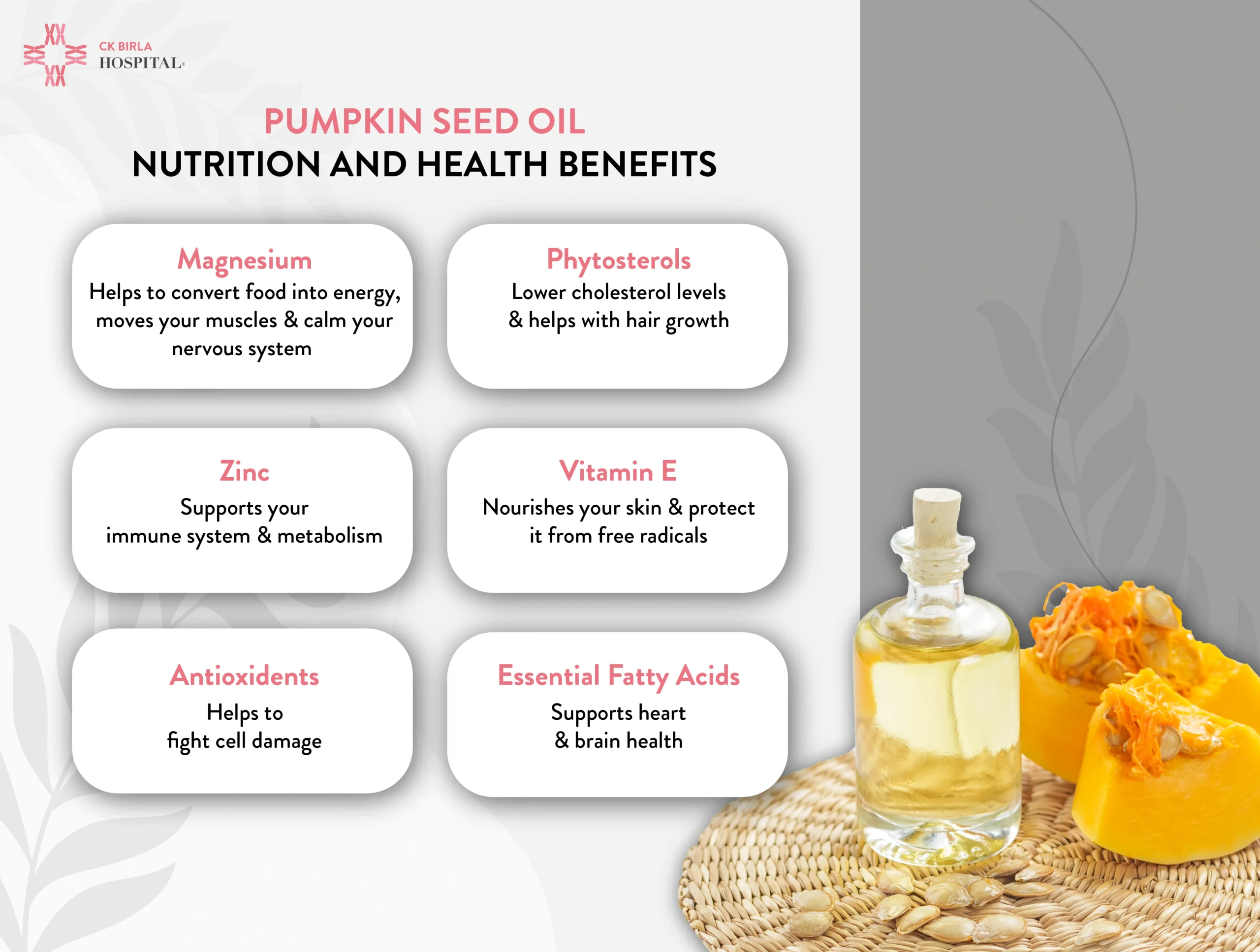
Notably, pumpkin seed oil is highly used as a nutritional supplement and as a natural source of nutrients like,
With their rich nutrient profiles, pumpkin seeds are a good source of iron. One cup of pumpkin seed contains 9.52 milligrams of iron, which is a significant proportion of the recommended allowance—18mg for premenopausal women and 8mg for men and menopausal women. Daily values are based on a 2,000-calorie diet. However, an individual’s calories may vary. Let’s talk about its nutritional value:
| Amount Per 100 grams Calories 446 |
||
| Nutrition | Value | % Daily Value |
| Total Fat | 19 g | 29% |
| Saturated fat | 3.7 g | 18% |
| Cholesterol | 0 mg | 0% |
| Sodium | 18 mg | 0% |
| Potassium | 919 mg | 26% |
| Total Carbohydrate | 54 g | 26% |
| Dietary fibre | 18 g | 72% |
| Protein | 19 g | 38% |
Pumpkin seed oils serve huge health benefits. So, let’s explore them.
Pumpkin seed oil may help with overactive bladder and other urinary disorders, as it promotes prostate health. It seems to be particularly useful for treating benign prostatic hyperplasia (BPH), a condition caused by the enlargement of the prostate gland, which can block urine flow.
Moreover, pumpkin seed oil has been shown to improve the condition of people experiencing urinary disorders. According to one older study, 47 men with benign prostatic hyperplasia took 320 mg of pumpkin seed oil daily for one year. This treatment helped reduce symptoms, improve quality of life, and increase urinary flow.
Pumpkin seed oil is packed with healthy fats, antioxidants, and other essential nutrients that may help lower blood pressure and cholesterol, reducing the risk of heart disease. Several studies suggest that pumpkin seed oil can benefit heart health.
One study found that postmenopausal women who took 3 grams of pumpkin seed oil daily experienced improvements in blood vessel stiffness and function, potentially helping to prevent high blood pressure.
Whether you are experiencing excessive hair loss, baldness, or hair thinning, pumpkin seed oil for hair could be a good option.
According to a study, men with mild to moderate hair loss who took pumpkin seed oil supplements saw significant improvement in hair quality, with hair growth increasing by 30% compared to those who took a placebo.
Another small study found that pumpkin seed oil may promote hair growth in women with hair loss when applied topically over three months.
Pumpkin seed oil contains vitamins, minerals, and antioxidants that are beneficial for healthy skin.
Pumpkin seed oil is rich in fatty acids, which help keep skin moisturised and nourished.
Its anti-inflammatory properties soothe irritation and itching, keeping your skin soft and plump.
Due to its high antioxidant content, pumpkin seed oil helps maintain a youthful appearance by protecting skin cells from oxidative damage — pairing well with other foods that boost collagen and fight wrinkles.
This oil contains vitamin A and can also enhance skin texture and tone.
With its anti-inflammatory and antibacterial properties, pumpkin seed oil can improve skin quality by reducing the appearance of fine lines, wrinkles, inflammation, and breakouts.
Remember, moderation is key when it comes to consuming pumpkin seed oil. While it’s generally safe, some individuals have experienced allergic reactions or skin irritation. It’s also worth noting that it may lower blood pressure, so those with low BP should be cautious.
Consuming large amounts of pumpkin seed oils can also lead to weight gain. So, before incorporating it into our daily diet, make sure you can consult your doctor.
Are you curious about the uses of pumpkin seed oil? This versatile oil, with its nutty flavour, aroma, and colour, is a healthy and natural choice for a variety of purposes. Let’s explore its uses in more detail.
Pumpkin seed oil is a powerhouse of essential nutrients for overall health and well-being. Human and animal studies have found that it can improve heart health, hair growth, urinary tract health, hair and skin quality, and more. It can be used for many purposes, like cooking, supplements, hair and skin health, and more. For more such nutritional guidance and a proper diet chart reach out to Dr Prachi Jain, Chief Nutritionist at the CK Birla Hospital, Gurgaon. Book an appointment.
Pumpkin seed oil is known for various health benefits. Packed with antioxidants, healthy fats, and essential nutrients like zinc and magnesium, pumpkin seed oils are beneficial for overall health.
You can take it daily, but it’s essential to do so in moderation. It is safe for people when used as a supplement and when cooking. Daily consumption of pumpkin seed oil supplements can benefit heart health and skin & hair health, but excessive intake might lead to weight gain. If you want to incorporate it into your daily diet, you can consult your doctor, especially if you have existing health conditions or are on medications.
Of course, you can use pumpkin seed oil on your hair daily. It is completely safe, but initially, you need to monitor how your hair responds. This oil is rich in vitamins and fatty acids, which can help moisturise the scalp, promote hair growth, reduce hair fall and thinning, and strengthen hair. If you have an oily scale, try to avoid it regularly; it may lead to buildup.
In addition to its benefits, it also has some side effects. Most people experience allergic reactions, irritation, itching, or rashes on their skin. Consumption of excess amounts may lead to digestive issues, stomach pain, or diarrhoea. You may also experience low blood pressure, weight gain, and more. Hence, you must consult your doctor, especially if you have underlying health conditions.
What could be more disturbing than seeing blood at a time when you are nurturing a new life? Experiencing blood spotting in pregnancy can cause fear, worry, and anxiety for expectant mothers. It can also make you question whether everything is alright with their baby or not. However, it’s completely natural to worry, as miscarriage is often the first thought that comes to mind.
In this context, you need to understand that spotting doesn’t always bring a red flag. There can be many reasons why you may be bleeding or spotting during pregnancy. Some reasons might be serious, while others might not. So, if you’re curious to know the reasons for spotting during pregnancy, this blog is dedicated to you.
In this blog, we’ll dive deeper into the signs and causes of spotting in pregnancy. But, first you need to understand the difference between spotting and bleeding.
Table of Contents
If you’re experiencing blood spotting in pregnancy, don’t panic. Yes, it is not always a sign of miscarriage or anything serious. From the time you get pregnant to right before you give birth, spotting in pregnancy can happen anytime.
The main difference between spotting and bleeding is the quantity of blood. Bleeding is a heavier flow of blood, even if it is light in color, but it is usually stable and lasts for several days. Bleeding means a heavy flow of blood which can stain a sanitary napkin. It is red in color, and may include clots.
Bleeding or Spotting in early pregnancy is quite common. Approximately, 15% to 25% of pregnant women have experienced the same in the first 12 weeks of pregnancy. Even though it’s common, you should still consult with your gynaecologist to know if you may experience the same.
According to the study conducted by American College of Obstetricians and Gynecologists, bleeding in the first trimester occurs in 15 to 25 out of every 100 pregnancies. This usually happens in the sixth and seventh weeks of pregnancy, but it does not always mean miscarriage or a sign of something wrong. However, there are various factors which can be responsible this, including :
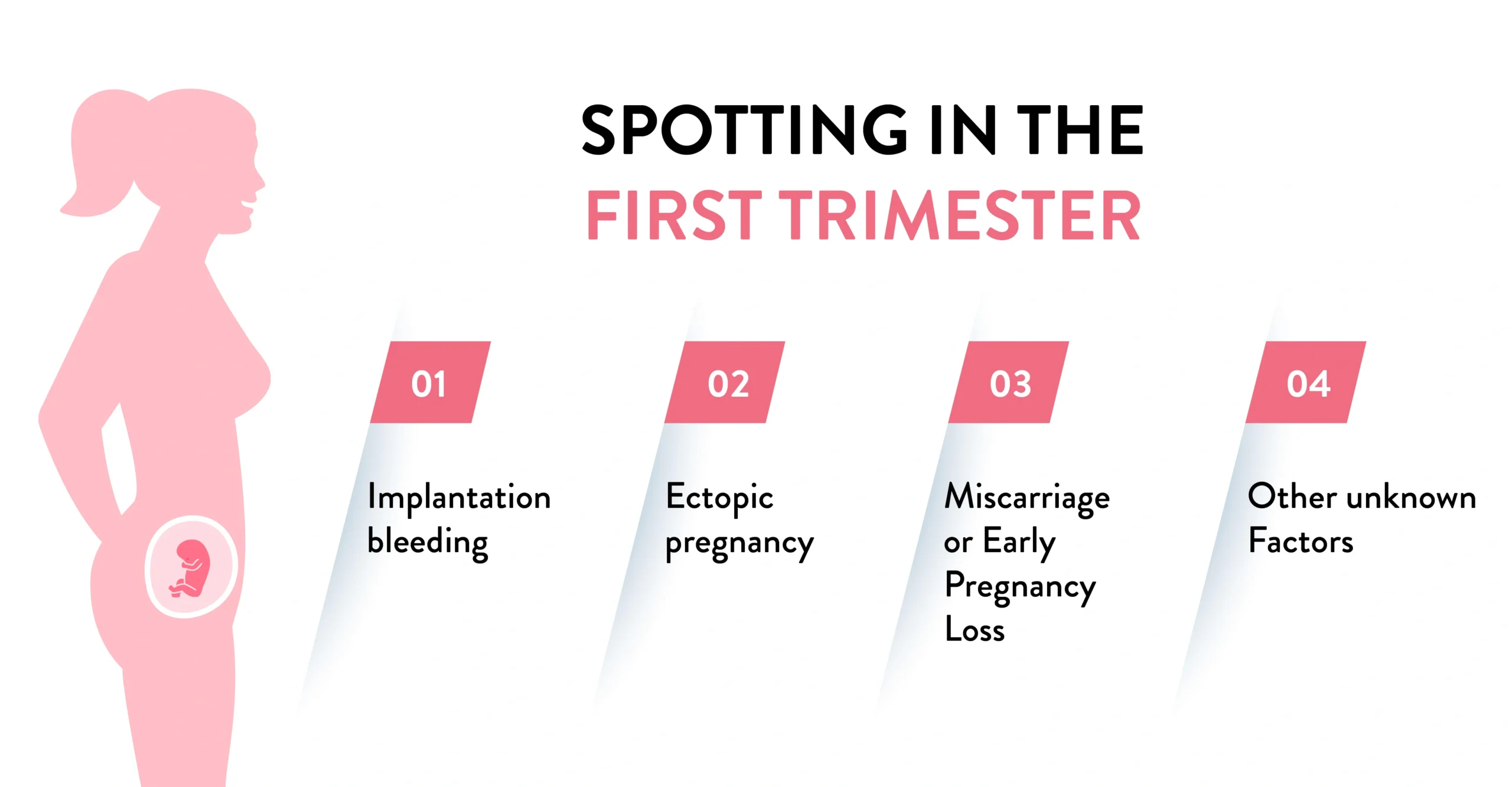
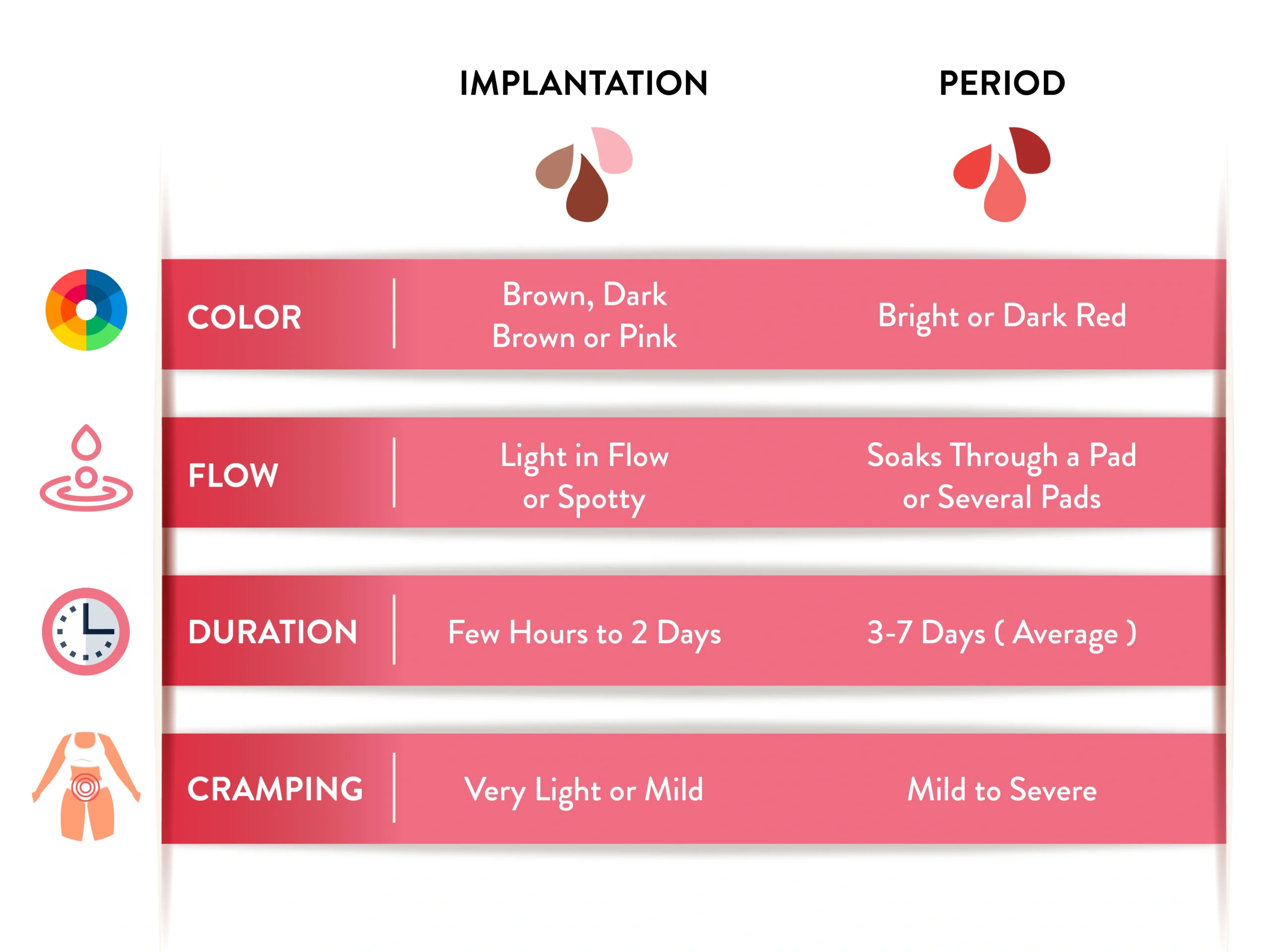
It happens between 6 to 12 days after conception, and is a sign that the embryo or fertilised egg attaches to the lining of the uterus. If spotting happens during the first trimester, it is usually light pink or brown in color and lasts between a few hours to a few days. In which case, you don’t require a sanitary napkin. Most pregnant women have experienced the same, but for some women, it is an early symptom of pregnancy.
Ectopic Pregnancy is a medical emergency, where the fertilized egg implants outside the uterus, usually in a fallopian tube. Fallopian tubes are those tubes are connected to ovaries to the womb. If the fertilized egg gets attached to them, it won’t develop into a baby.
In this medical condition, your health may be at risk if you continue your pregnancy. You may experience vaginal spotting, abdominal pain, fainting, dizziness and more. If you experience these signs, contact your doctor immediately.
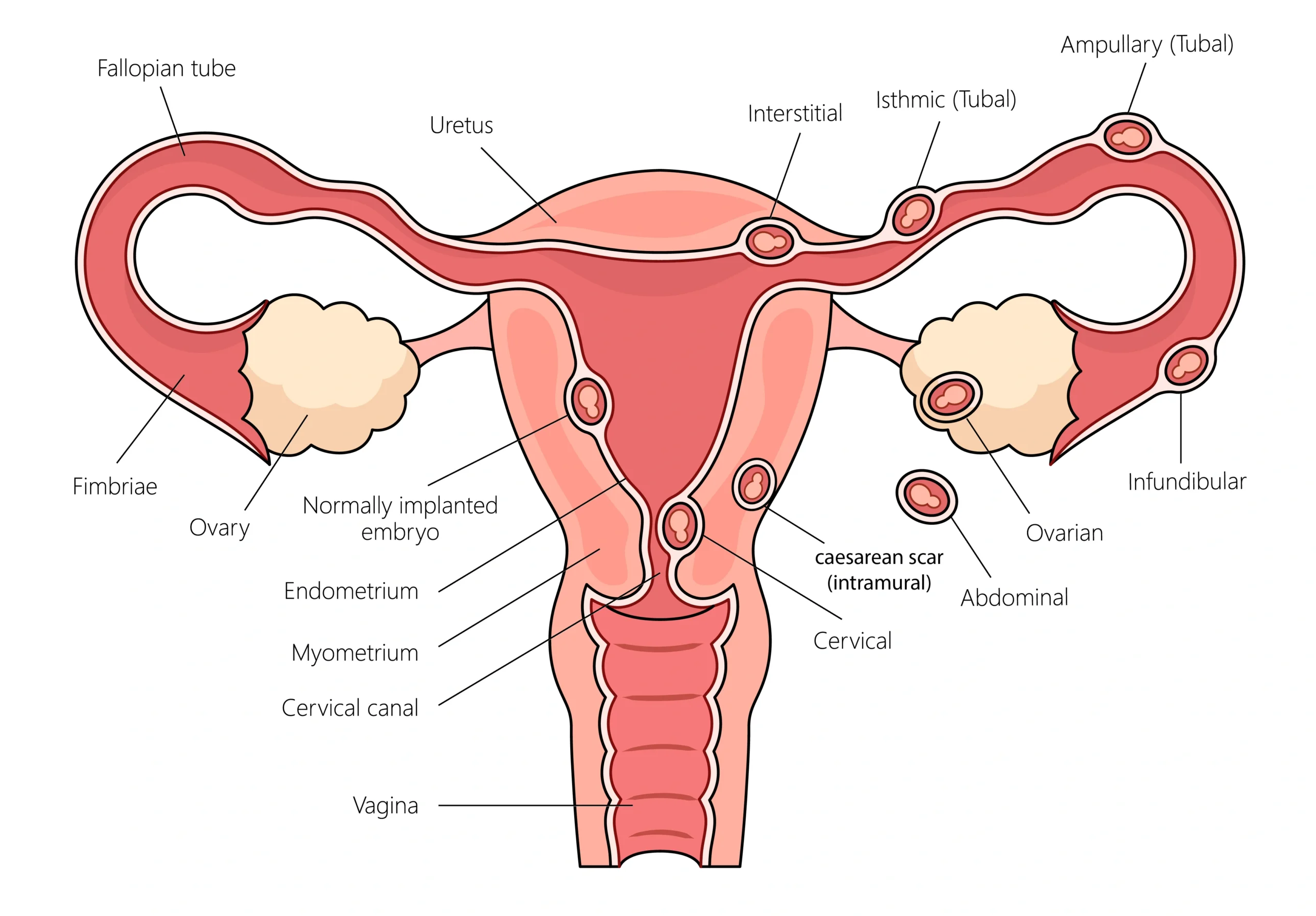
Most miscarriages occur in the first 13 weeks of the pregnancy. So, if you experience spotting and vaginal bleeding in bright red color or brown, contact your doctor immediately. You may also experience various signs, such as- back pain, cramp, passing tissue with clot and more.
A decline in HCG levels indicate miscarriage or pregnancy loss. However, having a miscarriage doesn’t necessarily affect your next pregnancy in future.
Spotting may also happen due to hormonal changes, cervical changes, or after intercourse. However, infection is another possible cause, so it’s important for you to consult your doctor to rule out serious issues.
If you experience light spotting in your second trimester, it may be caused by cervical irritation, often after sex or an exam. It is usually not a concern. Cervical polyps and harmless growths can also cause spotting. But, if you get heavy vaginal bleeding like menstrual period, contact your doctor immediately, it may be a sign of major concern, including :
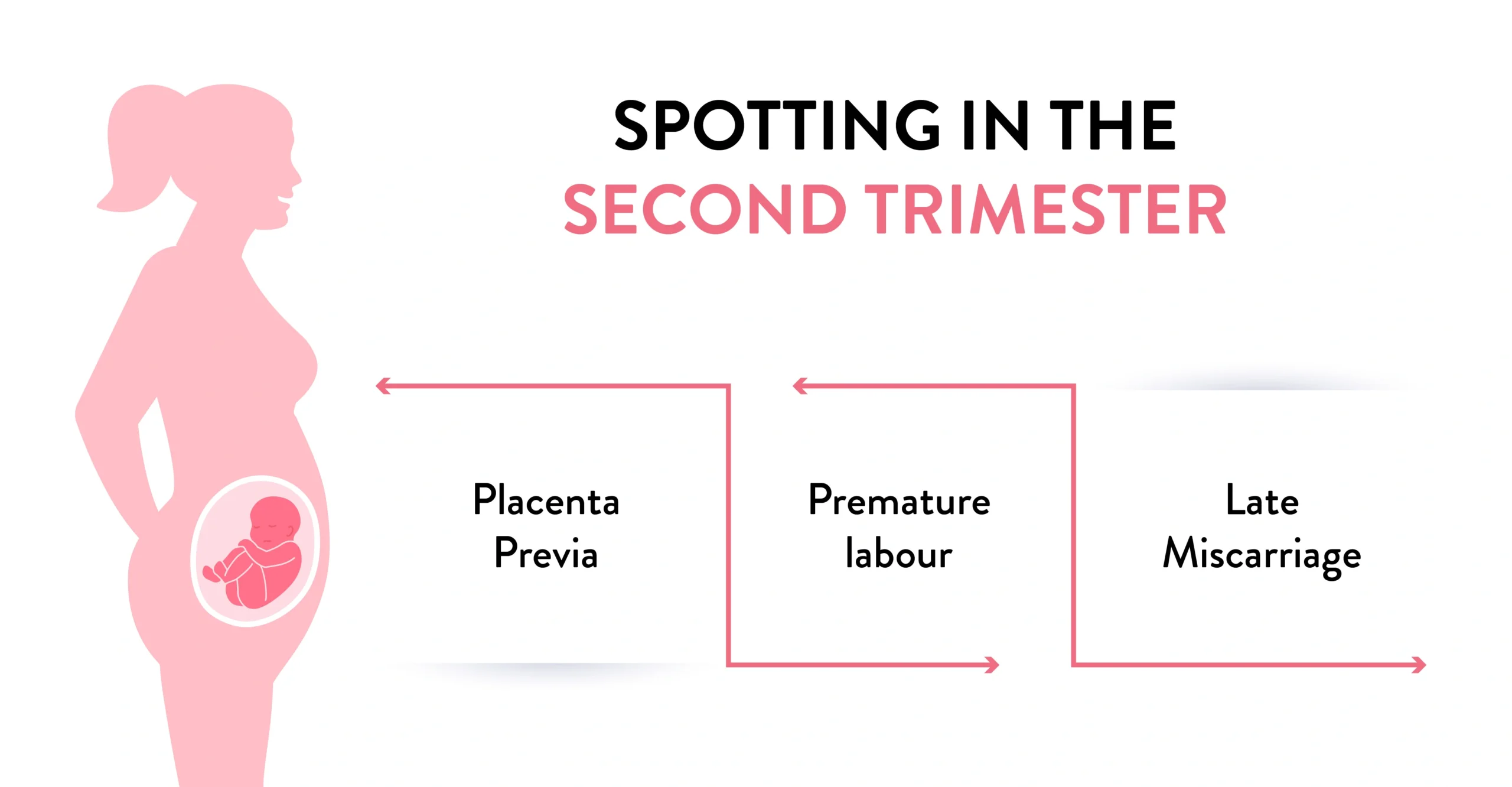
The placenta plays a vital role in providing nutrients and oxygen to the baby and removing waste. Early in pregnancy, it is low in the uterus, but as the uterus grows, it usually moves up. If it remains low and covers the cervix, it’s called placenta previa, which can lead to bleeding during pregnancy or delivery.
Sporting or bleeding during the second trimester of pregnancy can also be a sign of preterm labor. It happens when labor starts before 37 weeks of pregnancy. However, light spotting or bleeding is usually not associated with preterm labor. You may experience a few discomforts, such as change in vaginal discharge, pelvic or lower abdominal pressure, constant, low, dull backache, mild abdominal cramps, and more.
Spotting and bleeding are also common symptoms of late miscarriage. Along with that, you may also experience severe cramps, and in some cases, your water bag may break. So, if you experience these signs, contact your doctor immediately.
Bleeding or spotting in light red or brown during the third trimester can occur due to sex or a cervical exam. In most cases, it is common and not usually a cause for concern. It can also be due to a bloody show’ which is a sign that labor may be starting. If you’re experiencing heavy vaginal bleeding, you can contact your doctor as soon as possible, it may be a sign of major concern. It could be caused by :
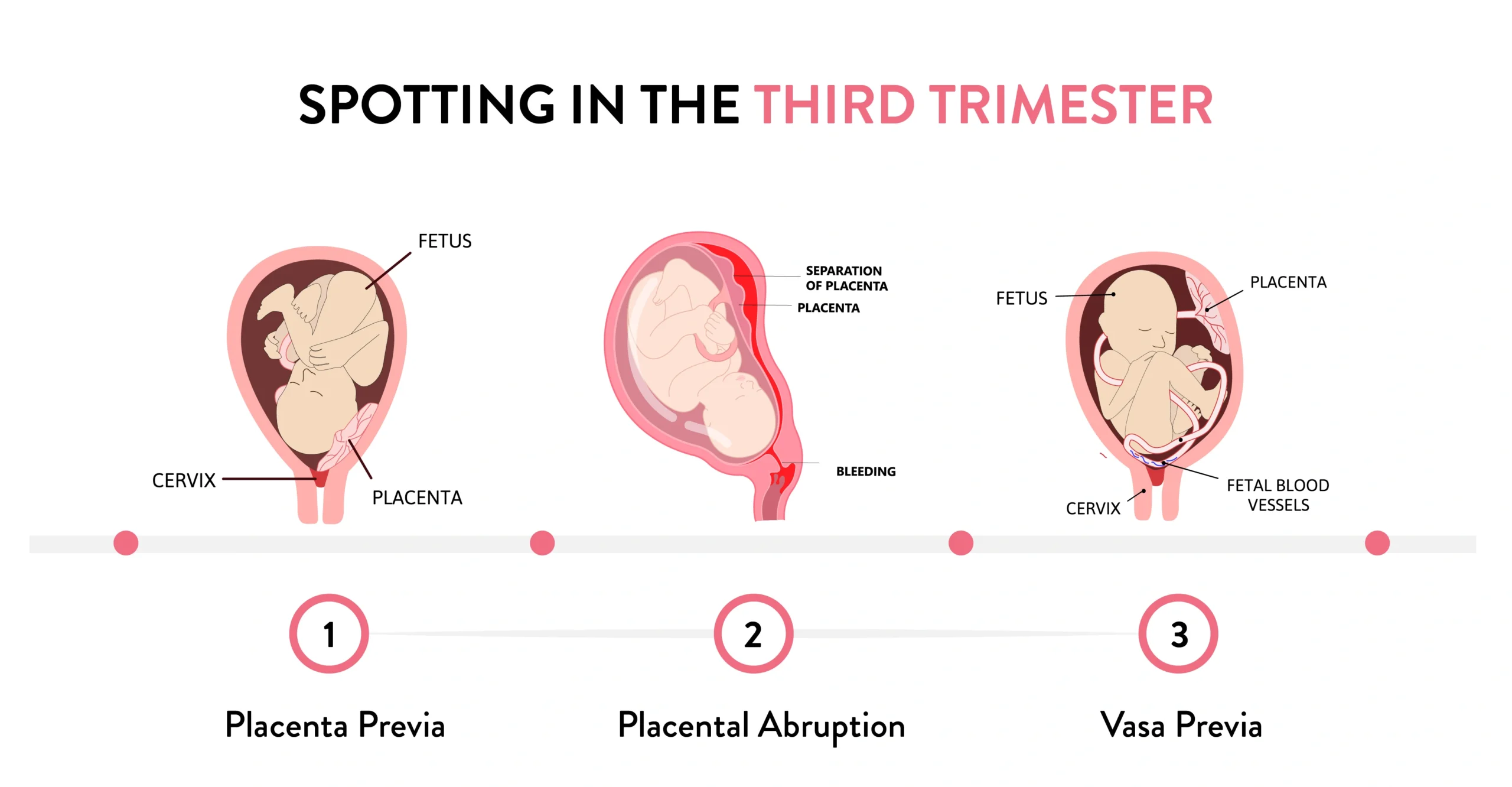
Placenta previa can cause spotting or bleeding during your third trimester of pregnancy. You may experience bright red vaginal bleeding without pain. It usually happens after 20 weeks of pregnancy. It can be triggered by sex, a medical exam, or uterine contractions.
Placental abruption is most likely to occur in the third trimester of pregnancy. It happens, especially in the last few weeks before birth. In which, you may experience few signs, such as vaginal bleeding, although there may be no blood, but have abdominal pain.
In most cases, pregnant women may notice painless vaginal bleeding in their third trimester. The blood may be a darker red, which can be a sign that it’s fetal blood instead of your own. Contact your doctor immediately if you notice bleeding during pregnancy, with or without pain.
If you’re experiencing spotting during pregnancy that isn’t implant bleeding or doesn’t stop after a few hours, you need to consult with your doctor. Your doctor might perform a vaginal exam to assess the bleeding and an abdominal or vaginal ultrasound to check the embryo’s development and heartbeat. She may also perform an HCG blood test to confirm a standard pregnancy or rule out an ectopic pregnancy or miscarriage. In case of any concerns or queries make sure to always consult with your gynaecologist. At the CK Birla Hospital our award winning team of OBGYN experts use a hands-on approach for every pregnancy, so that the expectant mother can have a smooth and hassle-free pregnancy. To book a consultation click here.
Yes, light spotting can be normal during pregnancy, especially in the first trimester. It may be caused by implantation, hormonal changes, or cervical irritation. However, it’s always best to consult your doctor to rule out any complications.
Pregnancy spotting can start as early as six to twelve days after conception, often referred to as implantation bleeding. This occurs when the fertilized egg attaches to the uterine lining. Spotting can also happen later in pregnancy due to various reasons, such as cervical irritation or hormonal changes. If you experience spotting, it’s important to consult your doctor for guidance.
In early pregnancy, light spotting—typically light pink or brown in color—is generally considered normal. It should be minimal and not enough to fill a pad or tampon. If the spotting is heavier, bright red, or accompanied by pain or other concerning symptoms, it’s important to consult your doctor for evaluation.

