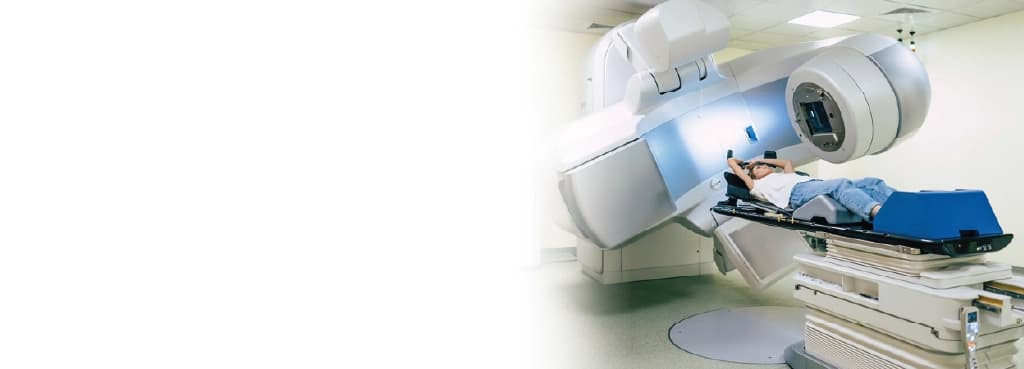
Radiation therapy has been part of cancer treatment for more than a century, and advances in imaging, treatment planning and radiation delivery have made it increasingly precise. Today it is used in roughly half of all cancer treatment plans worldwide, either on its own or alongside surgery and chemotherapy. By damaging the DNA of cancer cells, radiation can stop them from growing and dividing.
At the CK Birla Hospital, our radiation oncology team combines this established science with modern techniques to create treatment plans personalised to your cancer type, stage and treatment goals.
Radiation oncology is a branch of cancer care built around the use of high energy radiation to destroy cancer cells or stop them from growing and dividing. Alongside surgery and chemotherapy, it is one of the three main approaches used to treat certain cancers, shrink tumours before surgery or relieve symptoms in advanced cancer.
Treatment is planned and overseen by a radiation oncologist, who works closely with medical physicists, radiation therapists and other cancer specialists.
The precision of protecting healthy tissue while still targeting the tumour accurately is central to modern radiotherapy. Technology has advanced enough that treatment can be shaped almost exactly to the size and location of a tumour, so the radiation reaches the cancer without causing unnecessary damage to the surrounding area.
This treatment applies to a broad set of cancers:
It is also used for palliative purposes, which means relieving pain, bleeding, or pressure caused by tumours.
Proper diagnosis should always come before radiation treatment. The right approach always depends on the tumour’s type, size, location and stage of cancer.
External Beam Radiation Therapy (EBRT)
This is the most common form of radiotherapy, where a machine outside the body directs radiation beams at the tumour. It is usually given over several sessions, spread across a few weeks, allowing healthy cells time to recover between treatments.
IMRT shapes the radiation beam to match the exact contour of the tumour, varying the intensity across different areas. This means higher doses can reach the cancer whereas nearby organs receive far less exposure. It is particularly useful for tumours near sensitive structures like the spinal cord or salivary glands.
IGRT uses imaging scans taken just before or during each session to confirm the tumour’s exact position, accounting for small daily changes in body position or organ movement. It is paired with IMRT for accuracy to reduce damage to the surrounding tissue.
It is a faster and more advanced form of IMRT where the radiation machine rotates around the patient in a continuous arc, delivering treatment in a fraction of the time without compromising precision.
Despite the name, stereotactic radiosurgery for cancer involves no incisions. It delivers very high, precisely focused doses of radiation to small tumours, often in the brain, in just one to five sessions. SBRT applies this same principle to tumours in the body, such as early-stage lung or liver cancers.
It is a radioactive source placed directly inside or very close to the tumour. Brachytherapy is commonly used for cervical, prostate and some breast cancers. Because the source sits so close to the tumour, it delivers a strong dose right where it is needed while leaving nearby healthy tissue mostly untouched.
Treatment works best when it is coordinated, not scattered across different providers. That is why our radiation oncology team takes a multidisciplinary approach, working closely with surgeons, oncologists, and diagnostic specialists so your care stays connected at every stage, from diagnosis to recovery.
We offer:
If you or a loved one has been advised radiation therapy, our radiation oncologists are here to walk you through your options and what to expect.
Book a consultation with our radiation oncology team today!
No. The treatment itself is painless. You will not feel the radiation being delivered. Some patients experience discomfort later from side effects like skin irritation or fatigue, but the sessions themselves don’t hurt.
This varies widely based on the cancer type, stage and treatment goal. Some patients need daily sessions over three to seven weeks, whereas others undergoing stereotactic radiosurgery may need just one to five sessions. Your radiation oncologist will outline the exact schedule based on your treatment plan.
Fatigue and localised skin changes are the most common. Other effects depend on the treatment area. For example, nausea with abdominal radiation or dry mouth with head and neck treatment. Most side effects are temporary and manageable, and your care team will guide you through them.
Both, depending on the case. It may be used alone, before surgery to shrink a tumour, after surgery to eliminate remaining cancer cells, or alongside chemotherapy to increase effectiveness. This is decided by your tumour board based on your specific diagnosis.
Your radiation oncologist reviews your imaging, pathology reports, and overall health, often in consultation with other specialists on the tumour board. This helps determine the type of radiation, dose, number of sessions, and whether it should be combined with other treatments.
